
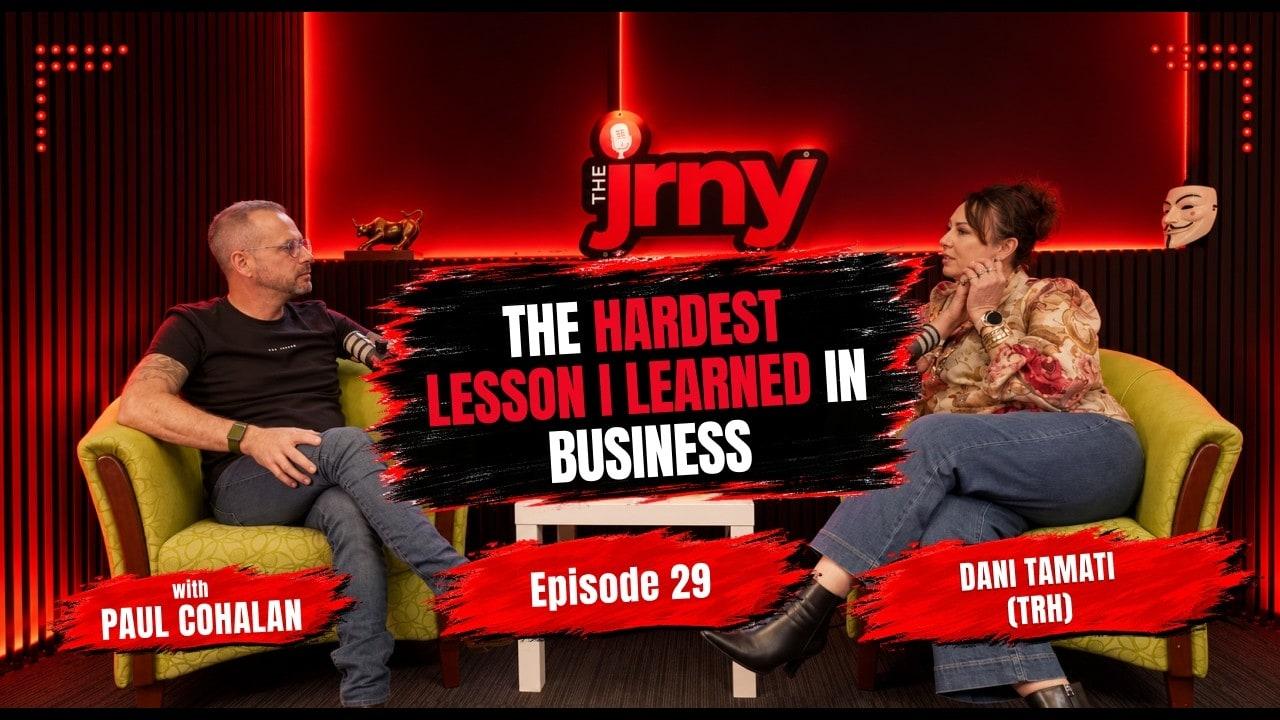
Meet Dani Tamati
Founder of THE resources HUB and Resourceful Women
Dani Tamati founded THE resources HUB, a Perth recruitment and career development company for the mining and resources sector, and Resourceful Women, a community that helps women come into, come back to and move within the industry. Born in Subiaco and raised in Greenwood and Kingsley, she started work with a newspaper round at 10, spent about eight years in hospitality including the Parmelia Hilton, then flew to Port Hedland at 21 for her first mine site job at Bamboo Creek. She spent years in Pannawonica and Paraburdoo, began recruiting for Drake from home with a toddler, and became the first regional manager for mining and resources at an international recruitment company. In 2012 she registered both businesses and went out on her own. She is a deputy chair of the CoRE Learning Foundation, a former president of the WA Mining Club, and has just completed the Australian Institute of Company Directors course.
Episode summary
In episode 29 of The JRNY podcast, Paul Cohalan sits down with Dani Tamati, the founder of THE resources HUB and Resourceful Women, who Paul has known for four or five years and who is also one of his insurance clients. Dani set both businesses up 14 years ago. On 1 July 2012 she started as the first regional manager for mining and resources at an international recruitment company, the same day her husband Ricky started with BHP and went fly in fly out for the first time. They had four kids and were living in a shed while they built their home in the hills. The role taught her what she did not want recruitment to be: ticking boxes and putting people out to site for the dollar value. She rang a girlfriend, registered the businesses, resigned, and two days later her business names came through. A month after that, she says, the bottom fell out of the industry.
She then spent six months in restraint, unable to talk to anyone, and parked Resourceful Women, her love job, to focus on THE resources HUB because it had to keep a roof over their heads. It took about seven and a half years to get there. She never took a loan, used about 17 grand of savings for websites, domain names and an IP lawyer, and has stayed cash positive, still paying wages and super through the three or four times a mining client has gone under. Her model is relationship driven rather than volume driven: about 70% of the work is permanent placements, she collaborates with other recruiters instead of hoarding candidates, never over promises on an urgent hire, and walks away from clients who want her to cut her rates.
Dani tells the story of how she got into mining in the first place. She worked in hospitality from 18 at the Parmelia Hilton, where a regular guest, an underground jumbo operator from the Pilbara, left her a message on her answering machine: fax your resume to Denise. At 21 she was on a plane to Port Hedland and then in a Land Cruiser with six miners, heading to Bamboo Creek. She later recruited for Drake from home in Pannawonica with a toddler, long before working from home was a thing, and said yes to almost every job the mine offered. She talks about her grandmother and mother as the source of her work ethic, why her kids had to have a job at 14 years and 8 months, checking on every placed candidate on day one, day seven and day 30, and why trust matters when her team works remotely. Next, her daughter Sienna is taking hold of Resourceful Women, there are two podcasts in the works, including Shifting the Narrative on women in industry, and a plan to help women leaving domestic violence into work. Her biggest learning: don't trust everyone, and find your tribe.
Key takeaways
Start lean and stay cash positive. Dani never took a business loan. She used about 17 grand of savings for websites, domain names and an IP lawyer, put every cent back into the business, and says it took seven and a half years to get where she wanted. When a mining client has gone under, three or four times over 14 years, she has taken the hit personally and still paid wages and super.
Recruitment runs on relationships, not volume. She did not want a transactional labour hire business that cuts its margins to win work. About 70% of what THE resources HUB does is permanent placement, which also carries less risk. Her pitch to clients is that the agency sits beside their existing team and has the connections and knowledge to back it up. Anyone can start a recruitment company, she says. Being any good at it is another matter.
Collaboration over competition. When Dani started, working with another recruitment company was unthinkable. Now she shares candidates and splits placements with other recruiters, because a candidate left sitting in one agency's database helps nobody. Collaboration over competition has been her motto from day one.
Never over promise. When a client wants five people for an urgent hire, Dani tells them she will find two, then finds another after that. Over promising and under delivering, she says, is a very typical thing to do in recruitment and part of why recruiters get a bad name. On rates she is just as plain: if a client wants her 33 years of experience, they pay for it.
Check in on day one, day seven and day 30. Every placement, temp or permanent, gets a message on day one to make sure the person got to site and has what they need, then a check on day seven and day 30, and more after that. Dani has brought in EAP services and has psychologists she can call, because so much goes through people's minds on site, away from birthdays and holidays.
Don't trust everyone, and find your tribe. Two days after she went out on her own, Dani needed an intellectual property lawyer because a colleague she trusted had taken her IP. Her advice to anyone starting out is to bounce ideas off the right people, not everyone, and to find your tribe: the people who will support you in the good and the bad times. She owns the number plate.
Resources mentioned
Transcript
Read the transcript
Dani Tamati: I remember being in the fetal position on the floor and Ricky bawling my eyes out and him going, darling, just go and get a job. Just go and get a job. You get paid really well. And I'm like, this is my job. Don't you get it? Biggest learning is don't trust everyone. If you're going out into business, bounce ideas off the right people. Don't bounce off ideas off everyone and don't tell everyone that you're going to do this.
Paul Cohalan: Trust your gut is probably one of the biggest things. Tamati, Dani Tamati, which I've known how long? Probably four or five years.
Dani Tamati: On and off.
Paul Cohalan: Yep. And in the last two years we've built a lot closer relationship. Dani owns the Resource Hub recruitment company and Resourceful Women, isn't it?
Dani Tamati: Yeah.
Paul Cohalan: So I've been wanting to get Daniel in here for ages. Finally we're here and she asked me what we're going to talk about. So it's all about you.
Dani Tamati: Oh, here we go.
Paul Cohalan: All right. And it's pretty casual,.
Dani Tamati: Love. Casual.
Paul Cohalan: No questions, like, there's no planning to this. Just let's get into it. Where'd we first meet?
Dani Tamati: I reckon we had a mutual connection somehow.
Paul Cohalan: Mining Club or a mutual connection?
Dani Tamati: No, I reckon it was a mutual connection and then I think we kind of worked out from going to an event that you were you, I was me and, you know, that was. That was the connection there, which often happens in my world, I must admit.
Paul Cohalan: So let's talk about Resource Hub. How long has it been going?
Dani Tamati: 14 Years next month. Same with Resourceful Women. I set them up after having a bit of a brutal experience with an international recruitment company where I felt that we were just ticking boxes and putting people out to site just for the sake of it, really, you know, for the dollar value, not for the purpose of what I wanted to. So you were working.
Paul Cohalan: For them?
Dani Tamati: Yeah. So I was their regional manager, mining and Resources, the first regional manager, Mining and resources that they'd ever had. I'd actually gone in for an interview with one of their parent companies and they said, oh, no, you're more blue collar than you are white, so we'll create this role for you. And I was like, well, that's pretty exciting. So undertook that started on the 1st of July 2012. Looked at Ricky and said, this is either going to make or break us, because he was starting with BHP on exactly the same day and he was then going to go FIFO, which was something that we as a family had never done. I'd obviously done it when I was in my 20s, but we'd never done fly and fly out with four kids. We were living in a shed. We were building the dream home. Whereabouts is that? So much going on in Parkerville, in the hills.
Paul Cohalan: You're still there now? Yeah, same,.
Dani Tamati: Same. Yeah. Yeah, My dream place. Yeah. So I took on this role and all of a sudden I was, you know. Well, I had to invest in a nanny because Ricky was traveling and, you know, he was learning gig because he'd been with Rio Tinto for 14 years. So all of a sudden he'd shivers. And then the kids were at that stage. Jake was 13, Tame was probably 10, Sienna was 7, and Carol would have been 6. So I was,.
Paul Cohalan: Wow,.
Dani Tamati: It was a lot. And then part of my.
Paul Cohalan: Start a business.
Dani Tamati: The remit for the role with a deco was, like, traveling to Brisbane, Sydney and Melbourne every few weeks. So I was like, holy, how am I juggling all of this? And then, like I said, it was probably a good and a not so great experience in the sense that I'm still connected with a lot of people that I worked with and I'm, you know, keep in contact with them, but it also taught me what not to do. And then I woke up one morning and I looked at Ricky and I said, I'm just gonna set up a. I'm just gonna register these businesses. I had no clue what I was doing. I rang a girlfriend of mine and I'm like, I think I wanna own a recruitment company. She's like, about time. So she kind of walked me through all the steps. And then. And back then, it was like, put an ad in the newspaper. So, you know, you had to put this ad in the newspaper to say that you wanted to own a recruitment agency? Yeah, exactly. Register your recruitment agency license, you know, go through all these steps. And I was like, what am I doing? But let's. Literally, two days, I resigned from my role. I picked up a stack of positions with a very large construction company, Walked off the terrace, out of the taxi and was so excited. Was exhilarated, actually. And I still remember it so vividly. And I got pretty much brutally honed down from the current. Then one of the managers, and I was just like, I don't need this bullshit in my life. I've got, you know, so much more to offer.
Paul Cohalan: To give than.
Dani Tamati: This. And I'd had the vision behind the Resources Hub and Resourceful Women for a while, and I just bit the bullet. And then two days later, after I resigned, they tried to keep Me. But I was like, nah, Bali's, I'm out.
Paul Cohalan: Yep.
Dani Tamati: My names came through, my business names came through. And I'm like, well, if that's not a sign, I don't know what it is.
Paul Cohalan: Boom.
Dani Tamati: And then a month later, the ass fell out of the industry and everything turned to shit.
Paul Cohalan: So what year was that? 2012. Yep.
Dani Tamati: Yeah. So it was. It was an interesting. An interesting time. But it's funny because I've just spent five days doing the Australian Institute of Company Directors course. I've.
Paul Cohalan: Seen that.
Dani Tamati: Yeah. Can I say, is fantastic. And I'm so freaking glad. Worth doing it? Oh, God, yeah, absolutely. Well, I never thought it would be. I begrudgingly did it because I thought, you know, I've been sitting on committees for 28 years. I've been on boards for the last seven years. Why do I need to. And I've had my own companies for 14 years. If there's nothing that. That hasn't taught me, you know, I've had my IP stolen twice. I've had to get an IP lawyer. I've had, you know, like, everything that could happen that's shitty in business. You're like, what can I learn? Yeah, that's it. But I'm so, so glad that I did it now. I'm not really a fan of study. I've never been, you know, like, that hasn't been my jam. But now I know that I just need to continue the momentum. How.
Paul Cohalan: Long did it go for?
Dani Tamati: Five full days.
Paul Cohalan: Five days? Yeah.
Dani Tamati: And it's. It's solid. Like, it's next level. You know, you walk, you get out of the room and you're just exhausted because you're just taking so much in and there's a lot of prep to do beforehand and I don't.
Paul Cohalan: Know if I could do it.
Dani Tamati: Well, can I just tell you? Best idea I ever had was move into the city and stay in accommodation.
Paul Cohalan: Move.
Dani Tamati: Into the city, stay in accommodation. And then I just. Then I had the whole time to myself. Like, if I wanted to study, I could, you know, it was. I think, because I also live, you know, 45. Where was it? It was in the CBD in Allendale Square at their actual premises.
Paul Cohalan: So what'd they go over? What kind of things?
Dani Tamati: So you learn a whole lot around governance and your, you know, your. Not just commitment, but what you need to bring to the table as far as governance is concerned. Strategy was fantastic. We went over financials, which, you know, there was everyone that I was with in the room. I was the only business owner. Everybody else pretty much worked for the government or worked for non for profit organizations. So it was a really eclectic mix to what I would be normally used to, I suppose. You know, I would think that there would be more mining professionals in the room. But it was only Women. The first female cohort for CEOs for gender equity, which Resourceful Women is a partner of.
Paul Cohalan: Ah.
Dani Tamati: And there was 11 of us and we just all clicked and, you know, we all had different stories to tell and it was just really. Yeah, it was just a.
Paul Cohalan: Few good relationships out of there.
Dani Tamati: Yeah, some great relationships. Yeah. And relationships that I didn't actually think I could leverage from, if that makes sense, you know, like now I'm connecting with somebody who's created. She's calling it the Career Taster program for year nines and that works in conjunction with CoRE Learning Foundation's board position, you know, because I'm vice chair of that. So we go into schools and we talk to kids about getting into STEAM subjects. So that's like a connection there. And then I was talking to another lady and she works for Electro Technology Training. She's gorgeous as well. And then she's like. And I said, I want more females. And she's like, so do I. So now we're having a conversation about that. And then there was another lady, she works and has worked.
Paul Cohalan: Did you just do any work? Did you do any study?
Dani Tamati: We did. Hate, I can't tell you how much, Paul.
Paul Cohalan: That's good.
Dani Tamati: Yeah. But then another lady has been in the government, but she's been around a lot of different areas, but it's always to do with training and employment and, you know, that sort of thing. So we connected and then she's like, I've got to put you in contact with this person. Do you know this person? Like, you know, so it was just really refreshing to have, you know, like a different sort of cohort of Women that you can. Yeah. Just kind of bounce ideas off. So, yeah, really happy.
Paul Cohalan: So. So the journey, the main thing it's about is roadblocks. Risk and resilience over the whole journey. Right. It doesn't have to be just business, like personally.
Dani Tamati: What was the first word?
Paul Cohalan: Roadblocks. Risk and resilience.
Dani Tamati: All of those,.
Paul Cohalan: All your roadblocks, you take risks and you build your resilience. Right. Like 14 years later, we're always learning. Right. So go, go back to 2012. What was your biggest roadblock?
Dani Tamati: Jesus Christ. Well, my biggest roadblock was I was in restraint for six months. I couldn't talk to anyone, couldn't do anything. I had this big, grand vision. I'd set the Resources Hub and Resourceful Women and I'd registered them both at the same time. I knew that I would only be able to focus on one. But Resourceful Women was always about engaging and encouraging Women to come into industry, come back to industry and transition within industry. But I kind of parked that up because I knew that as much as that was kind of like my love job and my, you know, ultimate area of focus, I had to kind of see switch to the Resources Hub because that was what was going to keep the roof over my head, basically. Revenue. Yeah. Which it didn't for a long time. As most businesses and startups, they.
Paul Cohalan: Take time, don't they? Always longer than you think.
Dani Tamati: Yeah. When people say it's a good seven years, well, it was seven and a half in my journey. Was.
Paul Cohalan: It really?
Dani Tamati: You know, I invested every single cent back into the business. I never took a loan. Might have taken about, I think from memory, about 17 grand out of our savings that Ricky didn't even know about to, you know, buy websites and buy domain names and, you know, all of a sudden I needed an IP lawyer and do all that sort of fun stuff. But other than that, I've always been, you know, cash positive, which is a really nice place to play, especially.
Paul Cohalan: In recruitment.
Dani Tamati: Well, God, yeah, because it's, you know, so when I've taken a hit because a mining company's gone to the toilet, I've taken it personally. I've still paid out my super. I've still paid wages, I've still done all of that. But the actual.
Paul Cohalan: Yep.
Dani Tamati: You know,.
Paul Cohalan: How many times over the years have you took a hit? You reckon?
Dani Tamati: Probably at least three or four.
Paul Cohalan: What have you learned from it?
Dani Tamati: I've learned that you need to be really clear in your communication expectations. Yeah. And I think another thing that the AICD course sort of teaches you is that risk. You know, there's plenty of us like you and me, we take risks, but, you know, there's other people that just wouldn't even consider it because it's not in their.
Paul Cohalan: DNA.
Dani Tamati: Yeah, exactly.
Paul Cohalan: Yeah. And you'll find most of them, people probably won't be a business owner.
Dani Tamati: Oh, they absolutely won't. They'd like to think about it.
Paul Cohalan: Yeah, they do. They think about it a lot, but they never take that jump.
Dani Tamati: But they can't. Yeah. And I mean, for me, I was really lucky that Ricky just went, okay, babe, you do you like, if that's what you want to do, you know. And he knew that the purpose behind what I was doing was not only to ensure that I was kind of there for the kids because I. I didn't want a nanny raising them any longer. He was traveling, obviously, for work, but it was also the purpose of what I was doing it for. I wanted to flip recruitment on its head and I wanted, you know, us to not sound like used car sales people and you know what I mean? Like, we kind of get bunched up in that.
Paul Cohalan: Yeah. I was the same when I started insurance. You want to be the same as everyone else, like a car salesman, because that's the way you kind of get treated.
Dani Tamati: And that's sad for car salespeople because there's some really good ones. Yeah,.
Paul Cohalan: There is,.
Dani Tamati: You know, and there's some really frigging amazing recruiters and insurance people. But there is also, like any industry, there's always going to be that element of Dodge.
Paul Cohalan: So what were you doing different at the beginning? Like, what was.
Dani Tamati: So. Well, because I was in restraint and I didn't know what business looked like. Like, my dad had had his own business for many years, but he wasn't a very good businessman. So I didn't know what business was like as far as that was concerned. I knew what I wanted both businesses to be and I knew that I wanted them to have purpose. But I sort of, like, I've always felt that I've worked across two different industries. Right. I work in recruitment and career development and I kind of hear that employment sort of side of things. But then I always am really mindful of everything that's going on in mining and resources, because that's my jam, that's my passion, that's what I love to play in that.
Paul Cohalan: And that's where we are. Right in WA. It doesn't matter what you do, everything comes from that here.
Dani Tamati: Yeah.
Paul Cohalan: Yeah.
Dani Tamati: So I've always kind of, you know, had ears to the ground on both elements and I just. I didn't want it to be volume driven. I didn't want it to be, you know, what's the term when they say, you know, when, you know, when. When clients want you to absolutely cut your margins. Yeah.
Paul Cohalan: And.
Dani Tamati: You cut.
Paul Cohalan: Through transactional. Yeah.
Dani Tamati: Like, no, it's relationship driven. It's about communication and we're supplementary to your existing teams. You want us in your corner because we're frigging good at what we do. Yeah. You know, and we've got the connections and we've got the knowledge as well, you know, Anyone can start up a recruitment company. Can they be any good at it? Probably not. Yeah.
Paul Cohalan: There's so many people trying. Like we see heaps of it at the beginning and they don't realise, like, even the insurance side, workers comp, you know, straight up. Well,.
Dani Tamati: You and I have had enough conversations over workers comp.
Paul Cohalan: It's crazy, you know, and brand new Companies are loaded, 75% straight away.
Dani Tamati: Yeah. Right.
Paul Cohalan: And you know, on the ANZSIC code and that's with no claims. And then you're at the beginning, so you haven't got everything in place. So the risk is huge,.
Dani Tamati: Massive. And.
Paul Cohalan: It comes straight off your bottom line.
Dani Tamati: Yeah. And if you don't do your due diligence, how do you know? You know, like when I set up the Resources Hub, it was to do with career development, recruitment and talent management. I could see that there was a niche for me to go into the market with something that was just more than a transactional labour hire company. And that's what I've built. You know, we're, like I said, We're 14 years next month, which is crazy to think. You know, When I was 13 last year I was like, oh, my God, I'm a teenager. This is insane. Like, I've already been here four times before but, you know,.
Paul Cohalan: So explain to us, explain to us blue and white collar placement and temp.
Dani Tamati: Yeah, Right. So, well, we do do perm recruitment for blue collar as well as obviously. But a lot of, well, it just depends on the client, depends on the contract, depends on the project, depends on, you know, many different things, you know, headhunting. We've got, we're really lucky now that we've got access to so many tools. You know, AI has changed the game a lot and I've always been, you know, sparkly thing in the corner. Let's go try it. I do love a bit of tech I like, you know, and sometimes it works and sometimes it doesn't. I remember during COVID I was saying to my team and I had five of us at that stage, maybe six of us, and I was like, right, we're going to try this new timesheeting thing. It's going to be amazing. It's going to change our world. It's going to link to Xero, blah, blah, blah, blah, blah. Everything's going to be, you know, tickety boo.
Paul Cohalan: Yeah.
Dani Tamati: Three weeks in, 15 grand later, and I'm thinking, what did I do this for? This is insane. So knock that on the head, start again, you know, so.
Paul Cohalan: You've got to Try things. Right. Because you've got to evolve.
Dani Tamati: Yeah, absolutely. You've got to.
Paul Cohalan: Save time, you got to be quicker, you got all that stuff.
Dani Tamati: Or you don't have to. Like, I've got plenty of friends. We're part of NPAworldwide, which is an international recruitment owners network, which I think I've explained to you before. And I've got plenty of my friends. They're just one man bands, you know, and if that works for you, that's amazing. If you want to grow. And sometimes, you know, I've gone through that phase over the last 14 years where I've grown and it's gotten to a stage where it hasn't worked. And then I've, you know, sort of gone back down to the number that feels comfortable. And then it's again, it's I'm happy days again, you know, like, it's all good.
Paul Cohalan: More temp or more placement?
Dani Tamati: Well, probably 70% of what we do is permanent placements, which again is a nice place to play in because that's.
Paul Cohalan: A good ratio.
Dani Tamati: Well, yeah. And it's less risk. Right. Cause I don't have so many people out that are going to have workers comp issues or whatever it might be. It's not just workers.
Paul Cohalan: I think the great thing with you, even when you got on board with us, is you're more around the medical side. You know, you haven't got like 100 fitters out there and like everyone's got them out and it's hard work, high risk and they jump ship and, you know, you're in a niche, which I think is awesome.
Dani Tamati: Yeah, that's kind of evolved as well, you know, like, I've been placing emergency services personnel and safety advisors since God was a boy. Like, you know, my husband, that's the place that he plays in, obviously his role, but it's kind of. It's almost like it's been by default sometimes. You know, it's like, oh, just give, you know, the Resources Hub and Dani Tamati a call. And then all of a sudden he'll be like, oh, can you get us an ESO for tomorrow? And I'll be like,.
Paul Cohalan: Yeah, of course.
Dani Tamati: I never promise if it's, you know, an urgent hire. And I never over promise if someone says to me, I've got some roles on at the moment, and I said to the guy, as much as you want five of them and I want to find five, I'm going to tell you that I'll find you two. And then after those two, then I'll find you another because I'd never want to over promise and under deliver. And that's a very typical thing to do with recruitment. Well, again, I think that's what gives us a bit of, you know, people a bad taste in their mouth when it comes to recruiters. You either love us because you're out of a job and we found you something, or you don't really like us because you've applied for a job and we haven't been able to secure that position for you. So, you know, we kind of sit sometimes in the middle, which.
Paul Cohalan: Yeah,.
Dani Tamati: Yeah.
Paul Cohalan: How do you go with the whole rates thing? I know we chatted about it when I was out there the other week, but it's hard, isn't it? Because everyone wants to screw your rates down.
Dani Tamati: I just walk.
Paul Cohalan: Away. You gotta kinda keep it there otherwise you lose your value, right?
Dani Tamati: Well, 100%. And if they want my 33 years of experience, guess what? You're gonna pay for that shit.
Paul Cohalan: And being in a niche as well, you're not. You know, you still got competitors, but it's not like a heap of fitters in that.
Dani Tamati: Yeah, that's right. But I don't. Yes, we have competitors, per se, but I think because we collaborate with other recruitment companies as well, which is a thing that. Well, when I first started, wouldn't have even been a conversational topic. Yeah, you wouldn't, you wouldn't think to. What do you mean? You're going to go and work with that recruitment company? That's just the dumbest idea ever. Yeah, but why wouldn't I not work with that recruitment company and share. The love goes.
Paul Cohalan: Both ways.
Dani Tamati: Profit and send it down the road and then it, you know,.
Paul Cohalan: Keep a client happy.
Dani Tamati: Well, keep client happy. Keep candidate happy, you know, keep your team happy.
Paul Cohalan: Yeah,.
Dani Tamati: Yeah, I.
Paul Cohalan: Do it with brokers. A lot of brokers don't like to because they're like this and you're like, why not help each other out?
Dani Tamati: Yeah, that's right. Why wouldn't you? Collaboration over competition all the time. And that was always my motto from day one, was that I never wanted to just be that singular recruitment Persona or company, that all I did was just stay in my bubble. I've worked with recruiters like that and they're frigging hard work. And, you know, there's no kind of.
Paul Cohalan: Collaboration or.
Dani Tamati: Yeah, but it's almost like I don't like them in a roundabout way because I think you're such a wanker. Why wouldn't you share your candidates with Me? Because if you and I are going to make a split, well, then we're going to make a split. Otherwise your candidate's just going to stay in the database, lost to God, and none of us are going to win.
Paul Cohalan: You.
Dani Tamati: Know.
Paul Cohalan: How many people would you have on your database?
Dani Tamati: I've got about 32,000.
Paul Cohalan: Yeah. How many active, you reckon?
Dani Tamati: Oh, really good question. We did try and do a bit of an update last year and I'm in the process. I do this every six or 12 months as I toss up whether or not I'm going to go to a new ats, and because there's so many, again, shiny things out there that are ats, so. Applicant Tracking Systems. Yeah, there's many that, you know, sort of link with your LinkedIn and they link with. Say, can I link with all these other things? But I've had mine. I was the first adopter of my particular recruitment database in Australia way back when.
Paul Cohalan: Yep.
Dani Tamati: And it's. Is it great? No, it's not fantastic, but it works.
Paul Cohalan: Yep.
Dani Tamati: So we did send out a mass email and text last. Last year, I think it was. It might have even been beginning of this year, just to say, you know, watch latest, you know, who's active, who's not, who's not. But we do have our regulars and we've got a lot of regulars that will ring up and go, okay, I'm ready for my next gig now. What have you got? You know, and we do try and reverse market wherever possible, the ones that we know like and trust and we know, you know, try and.
Paul Cohalan: Look.
Dani Tamati: After the ones that are really good. But we've also got lots that have done the dirty on us, too. And we're like, well, guess what, you're in the database. But yeah, red flag.
Paul Cohalan: Do you put a big line through them? Yeah, absolutely. Only if I really need you, I'll reach out.
Dani Tamati: You know what? It's, it's, it's very seldom will I go. Only if I really need you. Like, if you've done the wrong thing by me, by not getting on a plane, by not doing your job, not showing up, by. Yeah, just. Just whatever it might be. Guess what, sunshine? You've had one chance, but you won't get enough.
Paul Cohalan: Because, you know, it's all about your client, then, well,.
Dani Tamati: It's my brand face, right? It's my brand. And the other thing too, Paul, is that there will be a downturn. And when that downturn happens, because you think that you're worth 90 bucks an hour, but really you're only worth 70. When that downturn happens and you beg me for a job like it did in 2012 and you work for 40 bucks an hour, then let's have a conversation.
Paul Cohalan: I was having this chat yesterday about real estates.
Dani Tamati: Yeah.
Paul Cohalan: Because I'm looking for a new apartment at the moment.
Dani Tamati: Yeah,.
Paul Cohalan: Yeah, mate, there's just. There's no combo, no people skills, no nothing because of the way the market is. Because.
Dani Tamati: I just saw myself.
Paul Cohalan: Wait until this market drops.
Dani Tamati: Yeah, yeah.
Paul Cohalan: Or I'm looking for something in a couple of years and use it all chasing work, you know what I mean? Like.
Dani Tamati: Swings and roundabouts and I can't, like, I'm like, you know, I. Things stay up here for a very long time.
Paul Cohalan: When I was with BHP, it was the same as well with buying new equipment like trucks. The trucks and that, and the diggers. When I joined, it was like flat out big orders. So they were just account managers, they weren't really selling the trucks or anything. And when it all changes and there's no orders or they get cancelled, you know, downturn, then you actually got to work. BDM or sales or. Yeah,.
Dani Tamati: Yeah. And I think, you know, it takes a certain person to be a BDM and a salesperson.
Paul Cohalan: It does, yeah.
Dani Tamati: I think there's lots of people out there think that they're really good until they can't prove it. And, you know, I've seen that time and time again with both candidates and, you know, people in my own organisation.
Paul Cohalan: And I think the old lunches and beers just don't do it anymore. There's too many people hungry and out there. But it still definitely is people skills and relationship.
Dani Tamati: Oh, it is. I still think though, that Perth, you know, in comparison to eastern states, I think we still love a coffee, we still love a caffeine, we still love a beer or a wine. You know, it's probably in our, you know, innately in our nature of relationship building and continuing that, but I. Yeah, well,.
Paul Cohalan: If you do it, I think it's more few and far between now, so. And.
Dani Tamati: I think.
Paul Cohalan: You actually do it.
Dani Tamati: Yeah, I think too the younger generation, I've noticed, and not everyone, but a lot and even sort of up to the mid, sort of 40s, maybe they don't like picking up the phone. Like recruitment's all about picking up the phone. And I worked with this guy, he's like a superstar recruiter and I remember this is when I had the job prior to setting up the resources, having Resourceful Women and I see him get up off his, like, up from his desk and stand up and get on the phone. And, like, I kept saying this over a week, and I'm thinking, what the hell is he doing? So I went over to him and I'm like, what are you. Like, what's the going? He goes, well, I can talk clearly, you know, and I can walk around and I feel confident when I'm. And I'm like, what a freaking great idea, you know, so when I've had, you know, newbies kind of come into the business, I'm like, just stand up and see how you feel, you know, and if you're not comfortable with it, that's fine, but it might just change your whole mentality. And. And I.
Paul Cohalan: Think I do it naturally. Actually, I don't think about it. Well,.
Dani Tamati: I think you and I are such on the go that we talk to anyone at any time, you know,.
Paul Cohalan: Doing laps. Yeah.
Dani Tamati: I had a phone call from an old mate of mine. I'd actually placed him in a job. He's a superstar. Love him dearly. And he's gone from recruitment into training.
Paul Cohalan: Yep.
Dani Tamati: And he rang me up the other day and for some reason, I didn't have his number saved in my phone, so I didn't know who it was. And he was his, you know, sweetest thing, bit of a dag. And I spoke to him the other day and I'm like, you know, so you left recruitment and blah, blah, blah. And he's like, oh, mate, don't know if I go back now, you know, like, I'm in training and I'm loving it. And I'm doing BDM and sales and I'm. And I never would have thought that he would have, because he, you know, he was placing 250 people on at a project, like, you know, boom, boom, boom, Internal recruitment. That was the role that I put him in. He's like, I'm loving it. It's like, you know, crazy as. So, you know, And I think too, sometimes it's good to. To realize that you don't have to do what you've always done. You know, you can try something new.
Paul Cohalan: Pivot shift. Yeah, I think that happens a lot more than it used to as well now.
Dani Tamati: Yeah.
Paul Cohalan: Staying in the same job just doesn't really happen these days.
Dani Tamati: And I think it happens more so when you, you know, like when you're in your 20s and 30s, you've got lots of personal stuff going on. Right. In the sense that you're probably going to uni or you've started or you've finished an apprenticeship or you're, you know, starting a new job or whatever it might be and then, you know, you might be going through that whole phase of marriage and kids and then that changes. Your. Your thought process on the juggle is real. And I think we're fortunate now that there's more men that are taking up the opportunity to, you know, for parental leave and things like that. Which wasn't a.
Paul Cohalan: Thing. No, it wasn't.
Dani Tamati: Back in my day, I mean, I was a contractor through every pregnancy, so I didn't even get paid. I once I. Once I was about to pop, that was it. I was. Had no more income. You're off.
Paul Cohalan: Until. Yeah.
Dani Tamati: So, you know, I think things have really changed since then. But then I think you come to your 40s and 50s and we're just like, no. You know, and I'll tell you no twice to your face. And I have no qualms about doing so. Yeah, I think we just. The bullshit indicator is. Yeah.
Paul Cohalan: Going off. What. So 2012, you started the business. So you had the kids while you're working for that other company,.
Dani Tamati: So. Or.
Paul Cohalan: You're contracting to them.
Dani Tamati: So the big company that I set the division up for. No, so I had the kids.
Paul Cohalan: So they're already like 10 and 7. Yeah,.
Dani Tamati: Yeah. So I had the kids in Pannawonica, met Ricky and Pannawonica had Jake in 99. And then he's a boilermaker. He works 2 and 2. And then I had Tane in 2001, he's a scaffy. And then we moved to Paraburdoo because I had applied for a job on behalf of my husband who happened to be out in the middle of nowhere at an army camp and said, this is what I prepared earlier. And we got the job and we. And we. It was time for us to move, you know, like Pannawonica. I couldn't get a full time job even though I'd been out on site for five years and I'd been doing the recruitment for Drake. Yeah, it was really, it was really hard. The minute we said to the M manager, right, that's it, we're out of here, he was like, oh, I'll give you a shirt. And I'm like, bit late for that, isn't it? You know, like. So we moved to Paraburdoo and we had. Because Pannawonica is an open. Well, Pannawonica was a closed town. Right. So you don't have much privacy. You've got no real fencing or anything like that. It's all open and everyone knows everyone and which is great. How long were you.
Paul Cohalan: There for?
Dani Tamati: I was there for five years. Ricky was there for almost eight. He got there just after the cyclone. Olivia moved to Paraburdoo. Had our own house. It was brand new, refreshed, as in, you know, they'd totally gone through and, you know, new kitchens, new carpets, new everything. We had a pool out the backyard. Oh, my God, that's amazing. Because there was only one pool in Pannawonica, which was the public pool, which the kids learned to swim in. And the. Obviously the, you know, you'd go out to the river and stuff like that. Yep. And it was just like we'd grown up a little bit more, I suppose, if I think about it now. But Paraburdoo was super, super cliquey and I couldn't get work for love nor money. I tried. And even though I'd worked for my managers and I'd worked across all these different divisions, what's.
Paul Cohalan: The population there?
Dani Tamati: So at the time when we moved to Paraburdoo, there was about 800 that had an employment freeze for about eight months. And then it kind of. I think it got up to about 12 to 1300 by the time we left.
Paul Cohalan: Yeah,.
Dani Tamati: Lots of kids.
Paul Cohalan: Yeah.
Dani Tamati: Foxtel, you know, finally came.
Paul Cohalan: Did you like it there?
Dani Tamati: I loved it,.
Paul Cohalan: Yeah.
Dani Tamati: In fact, I really miss. I really miss going to mine sites, but I really miss being regional.
Paul Cohalan: In the community. Regional,.
Dani Tamati: Community. And I was involved in everything. You know, I was on the community advisory group. I was the president of anc. I was, you know, I'd get thrown into all these things and I suppose that's probably where my learning came from for, you know, community's always been a big part of what I've done. If I. And I said yesterday, if I could get paid for all the voluntary hours that I've done over the years, I wouldn't be sitting here, I'd be in the Bahamas or something. But I think, you know, it feels good to do good is my motto. And I think the more that you can give back, if you can give back and if that's your jam, I think it's really important because, you know, good things come in to those that. To those that help. And sometimes there's a lot of people out there that need help. It might just be a cup of coffee, it might be a place to stay, it might be, you know, it just depends on people's situations. But Sienna and I have had many a conversation that down the track, our plan for Resourceful Women is to be able to align with those Women that are coming out of domestic violence situations and be able to support them through employment opportunities. And that's our. That's our give back.
Paul Cohalan: Yeah.
Dani Tamati: And so that's probably on the cards for the next 12 months. That's awesome. Yeah,.
Paul Cohalan: Yeah. Like, giving's the pinnacle. I think once you start a business, do all that stuff, when you can help other people, I reckon that's probably the best feeling in business. It.
Dani Tamati: Is,.
Paul Cohalan: Yeah. You can make money, you can employ, you can do all that, but when you're doing something with not expecting anything in return and. And you can. I reckon it's the best feeling.
Dani Tamati: Yeah, yeah.
Paul Cohalan: It's like this. This has had social impact already with a couple of people and helped a couple of people just by what couple? Couple of the guests have said,.
Dani Tamati: Yeah.
Paul Cohalan: I'm like, if that's all that happens this year with this. Happy. Yeah,.
Dani Tamati: Happy.
Paul Cohalan: Days.
Dani Tamati: Exactly, exactly. And we're the same, you know, like, I've had some interesting conversations with people over the years and I've supported, you know, I've gone into Boronia and other women's prisons and I've run career days and stuff like that. Just before, the day before, actually, it would be four years ago today, it was the day before I was turning 50. It's my birthday tomorrow. We had a. Yeah, we had a careers day. And I remember I had. Because I had a dancella party for my birthday, of course I did. Which was bigger than Ben Hur. And I had all these props that were coming up to the property and my husband was having to set them all up. And of course, you know, this is a Friday and my birthday's on the Saturday. And I drove to Boronia and. Is it Boronia? I'm just trying to think. It's the one. It's the one opposite Mandoon. Is that Boronia? No, that's not Boronia. You know the women's prison that I'm talking about?
Paul Cohalan: Yeah, I do,.
Dani Tamati: Yeah. Yeah. I had spoken at Boronia, though that was years ago with another. I can't remember what.
Paul Cohalan: It's called.
Dani Tamati: Anyhow, the females prison. And I remember chatting to a mate of mine who owns a social enterprise and he also owns a recruitment company and he's very successful. And I was like, wow, you know, there's Women walking around with prams and babies and, you know, you got your little clusters of groups and stuff. And then this woman comes up to me and she starts chatting and I'm like, oh, how you going? You know, like, when are you due out? She goes, oh, probably another 16 years. And I went, oh,.
Paul Cohalan: Wow.
Dani Tamati: Okay, well, you know, that's a fair amount of time and I don't know what I can offer you as far as advice is because 16 years, things are obviously going to change. And she goes, yeah, I know that, you know, I'm doing a few courses, blah, blah, blah. And then I turned to my mate And I said, 16 years. And he goes, oh yeah, do you know who that is? And I went, no. And then he told me and I blow my mind. Wow. 16 Years is a frigging long time. And you think about all the changes to anything to life in general, you know, not just. I think I've got a lot of girlfriends at the moment. They're like, I'm going on this journey, I'm going to go and walk the Camino. I'm like, you have fun with that. I don't have time for that. Nonsense, you know, time.
Paul Cohalan: For that.
Dani Tamati: Yeah. I'd like to do it but, you know, I'm still. I'm still so heavily involved in the businesses that, you know, it's a bit hard sometimes to break away. As much as I'd love to. It's, you know, it's the base that I created. So.
Paul Cohalan: Yes, it is. So go back to the four kids. So 2012, started the business.
Dani Tamati: Yep. One in high school, three in primary school.
Paul Cohalan: So you told me your age so I can hit you up now. So what was. How old were you back then? So 40.
Dani Tamati: So I just turned 40.
Paul Cohalan: 40. You would have been. Yeah. So what'd you do before then? So.
Dani Tamati: So before then I worked in hospitality. That's how I kicked my career off and I loved it and I'm still in. How long did you do.
Paul Cohalan: That for?
Dani Tamati: I did that for. Oh, God, probably close to eight years.
Paul Cohalan: Yeah.
Dani Tamati: So I worked at the Parmelia Hilton is where I got my gig and that's actually how I got. Did you grow.
Paul Cohalan: Up here?
Dani Tamati: Yeah. So I'm born and bred. I'm born and bred Subi.
Paul Cohalan: Oh, yeah, Subi.
Dani Tamati: You.
Paul Cohalan: Knew where you're going today.
Dani Tamati: My great grandparents and my mum grew up here. I was born in Subi but then we lived in the northern suburbs. But dad was a chippy and mum, she helped dad with his business and then she got into. Well, she was in banking beforehand and then she sort of. She was the first person that I ever knew of and I'm really lucky that I've got very strong Women role models who ever worked school hours. When my mum and dad separated.
Paul Cohalan: Is that right?
Dani Tamati: She worked for. No. What was the name? P. It was a bank. Anyhow, she worked for them and she worked school hours and she said, I've, you know, my ex husband isn't around because my dad used to work at Broome and Derby and Kununurra and you know, work away for a long time. And so she worked nine till 3:30 and picked us up and, you know, that was kind of normal, I suppose.
Paul Cohalan: Yeah.
Dani Tamati: Yeah. But me. So met Ricky, two kids in Pannawonica and then moved to Paraburdoo. Then we had Sienna. We thought our little family was finished. And then our special little number four surprise rocked up. And he's gorgeous. He's a crane technician he works with. So all of my family are in the industry, obviously. Spent eight years in Paraburdoo and loved it. But, you know, the bubble was bursting and I was ready to. I was ready for something more and I really missed my family. Like, as much as I loved living regionally and I was so heavily involved in community, I. You know, my grandparents were getting older. I was really close to my. Were.
Paul Cohalan: They still here in Subi?
Dani Tamati: They were in Scarborough at that stage, yeah. But Nan lived in her house right up until she passed away a few years ago and she was my best friend.
Paul Cohalan: Oh, wow.
Dani Tamati: Yeah. So she was 90. What are we now? She's 22. She passed away. So she was 94. Just about 95. Yeah.
Paul Cohalan: I spoke to my grandmother yesterday, actually.
Dani Tamati: Oh, because you're really close with her, aren't you? Yeah, my.
Paul Cohalan: Mum's mum back over east.
Dani Tamati: Yeah.
Paul Cohalan: Lives in a little country town.
Dani Tamati: Yeah, I remember. Yeah, I remember you and I having a conversation about it. I think grandparents are like the salt of the earth. There needs to be more emphasis on loving your grandparents.
Paul Cohalan: There. Does it? Does it was funny last November, I had both of them in the hospital at the same time. I think that's what might have started the convo. I flew home at the last minute on a Monday night.
Dani Tamati: Yeah.
Paul Cohalan: And the one that's alive now, she probably wouldn't have lived if she didn't go to the ambulance that night. And I said, I'm flying over, so I'll bring the ambulance or you. And she wouldn't let, like my uncle and that. Anyway, she did and lucky she went in. But the. My other grandmother that I thought would have come out, she didn't. She ended up having. She had a hip replacement. And then what happened? She'd have chemo and then it just like, you know, how Dranger. Yeah. Didn't come back from it.
Dani Tamati: Yeah. Mine was a stalwart. She had a fall and was found out the front of her house and we think she was probably there for 24 to 48 hours, so that was not great.
Paul Cohalan: No,.
Dani Tamati: But I. When she went to hospital, I stayed with her and she was in hospital for about six weeks and, you know, she was dozy and she just wasn't herself and then we ended up. I didn't want to, personally. I wanted to keep her at home and find nursing staff and, you know, employ them through my company, clearly, because that's what I do.
Paul Cohalan: Yep.
Dani Tamati: But, you know, Mum's an only child and at the end of the day, it was her decision and she's like, no, we're finding a home for her. So we did. But.
Paul Cohalan: So is your mum's mum.
Dani Tamati: Yeah. But as soon as we. And she was my last grandparent that was alive, but as soon as we kind of put her in that home. As much as she was similar kind of personality to me, in the sense that, you know, she could talk to anyone. She was bubbly, she was, you know, she was the life of the party. As soon as she went into that home, she just kind of changed. Yeah. And it was during COVID It was a shit time. But I was there when she passed away, which was. But she's in the 90s,.
Paul Cohalan: Eh?
Dani Tamati: Yeah, but you think. You know, I was listening to a song on the way up the hill last night, getting a bit teary because I think of her every time I hear this particular song. And I was like, you know, I wonder if she's looking down, going, jesus, just slow down, girl. Or, oh, my God, you're doing so amazing. You know, Like, I just want to hear her voice. And I'm. Funnily enough, I've kept two of her voicemails on my phone, so every now and then when I get a little melancholy, I can, you know, hear her voice. That's.
Paul Cohalan: So cool.
Dani Tamati: Yeah, she was. She was a doll. She's beautiful.
Paul Cohalan: That's awesome.
Dani Tamati: And she was a worker. She worked, you know. My mum in the 50s, was pretty much raised by her grandmother because my nan worked solidly for Perth photographics for, like, 38 years.
Paul Cohalan: So what do you reckon you took away from your grandmother?
Dani Tamati: Well, I think from both my grandmother and my mum, probably that work ethic, you know, I think. And I think too, like, if I wanted something, I need to. I needed to work to buy it. Right. So even when I was younger, you know, my stepfather had cancer when we were kids. It was pretty brutal. We, you know, didn't have a lot of money. But I remember Mum saying to me, if you want that black. It was an Eagle bike. It was called. If you want that black Eagle bike, you save half the money and then Mick and I will pay for the rest, you know, because my dad was useless when it came to anything. There was no maintenance, there was no. He was. He was the fun police. He'd Fly in, feed your Hungry Jack's, you know, take you to the movies and do that sort of stuff. And then he'd be gone again. But, you know, my mum's withstood so much, really. And she's a superstar and, you know, she's. All my friends adore her and, yeah, she's like, oh, how's Kez going? What's she up to? You know, And I'll say, oh, she's. Well, actually, tonight she's flying to China with my brother.
Paul Cohalan: Wow.
Dani Tamati: Work. So she's still, you know, she's 75.
Paul Cohalan: Yep,.
Dani Tamati: 75. And she still works in my brother's business, you know. So the two of them are off to China tonight. That's awesome. Products and stuff, which is, yeah, super cool. And she's. Yeah, she's just. I don't know, she's just that solid person. But my nan was the same. My nan was like. I said, she was the ruckus, she was the funny one. Her and I were just like two peas in a pod.
Paul Cohalan: Yep.
Dani Tamati: Which I'm sure Mum didn't appreciate at times when we both got together. But, yeah, she was. She was adorable. And I. Absolutely, you know. That's.
Paul Cohalan: Cool.
Dani Tamati: Yeah.
Paul Cohalan: I always kind of knew. I got my work ethic from my two grandmothers mainly. But when I went and done the psychedelics, when I first split with my wife, the first, first time I'd done all. Went back to all the Women in my family.
Dani Tamati: Wow. It's.
Paul Cohalan: Crazy. So,.
Dani Tamati: Hang on, what's the psychedelics.
Paul Cohalan: Like? Cactus goes for like 16 hours. It's up in the hills. And that's all I'm saying. The whole thing, when it went like, really down the rabbit hole, like different things, but the main thing was all the Women in my life. So obviously I just got divorced. So, you.
Dani Tamati: Know,.
Paul Cohalan: And I've got a daughter. And it all come from my grandmother's all the way to my daughter,.
Dani Tamati: Which is why they're so important to me.
Paul Cohalan: It was absolutely crazy and I learned a lot, but it went back to my grandmothers. Yeah. And like, hard work and ye, you know, that old school culture.
Dani Tamati: And I was saying to the, you know, the Women in this cohort, over the last few days, I think what we've done as a society that hasn't been to the benefit of future societies in community is we've mollycoddled our children, we've told them it's okay, we're gonna buy you a car and we're, you know, gonna send you to uni and we're gonna do all this instead of get off your ass, go and get a job at 14 years and 8 months, you wanna buy a car, you save your money and you do it the hard way so that it actually teaches them, you know, instead of, instead of giving. And I'm not saying that's every child. It's absolutely not. But my kids, you had to have a job at 14 years and 8 months. Non negotiable.
Paul Cohalan: Yeah.
Dani Tamati: And you know, well, Carol had an apprenticeship at 15 and he was fast tracked through his apprenticeship and he, you know, got through that in three years.
Paul Cohalan: Unbelievable.
Dani Tamati: He's just spent two months in Europe living his best life, you know,.
Paul Cohalan: Can't beat that. I.
Dani Tamati: Think he's a bit exhausted but you know, he's been part of the night. He's got to come home. Gotta go back.
Paul Cohalan: To work to relax.
Dani Tamati: Yeah. Have.
Paul Cohalan: A.
Dani Tamati: Break. Yeah. But you know my eldest, he's overseas at the moment. He's in Ireland and then Taine's just got back from New Zealand and he's had a really amazing experience over there because he went by himself whereas he's only ever been with us and he knows all his fun. How.
Paul Cohalan: Old? Senior.
Dani Tamati: He's 25. Just turned 25. But he came home and he was like mum, you know what? I think I'm going to work a few months and then I'm going to go and spend a month in New Zealand and just really get to know my whanau and really absorb the culture because it is phenomenal. Like I go back to New Zealand and I feel like it's home, you know, I just adore it like and I can't wait. I've.
Paul Cohalan: Only been there once for a conference. I'd love to go back because of the country and do.
Dani Tamati: It when the kids are little too. Like not little little but do it when they're like, you know, sort of in their teens when they take them with them. God, yeah, yeah. Get a camper van. That's what we did with the four kids. We got a camper van, we went around the north island. We had the fattest time. It was so good. They still remember it. Tane ended up in hospital unfortunately. But yeah, it was, it was brilliant.
Paul Cohalan: So what did you do as a kid here? So Subiaco then Where?
Dani Tamati: So born in Subiaco, grew up northern suburbs in Greenwood, Kingsley and worked my ass off. I started, started with newspaper rounds at like age 10 and then I got my first job at 12 working at a fruit and veggie shop for a dollar an hour.
Paul Cohalan: Wow.
Dani Tamati: And I did that on and off. Then I was working in a news agency. I worked in delis then.
Paul Cohalan: What's your memory you remember.
Dani Tamati: Of what?
Paul Cohalan: Any of that time. Fruit and veg shop, walking around, doing.
Dani Tamati: Pamphlets. The Souvellas who used to own the fruit and veggie shop, occasionally they'd ask you up for lunch and they'd have this, like, wicked Macedonian, I think they were table spread. And they'd have wine at lunchtime and all the salamis and food and vegetables. And it was like. It was like, oh, my God. I felt like I was, you know, overseas somewhere in some exotic country. What else do I remember? Well, I worked for a guy that was horrible. And I used to have to lift really heavy things. And I got quite. I think because I grew quite fast, I had a lot of back pain and stuff like that. So that wasn't ideal.
Paul Cohalan: So what then? Couple of moments. So how does that reflect now, you being the boss and owning the company?
Dani Tamati: I'm not a you must do boss at all. My expectation is that you will come to me if you have a problem, but you'll probably find a solution. Like, that's what, you know, I want you to own it, but have a go, but don't be. Yeah, exactly. But don't be hesitant to ever ask, because if you don't ask, you don't know.
Paul Cohalan: Is that what you were taught?
Dani Tamati: I think so. I mean, recruitment I kind of fell into. Well, I absolutely fell into it. So I think one of my favorite jobs was obviously at the Hilton. I loved that job. I was, you know, that was my family. What.
Paul Cohalan: Were you doing there?
Dani Tamati: So I started off in Adelphi Steakhouse, and two days after. It was two days after I turned 18, I started. And then two days later, I remember Chris Paul as my gorgeous manager who I'm still in contact with now. I was carrying a tray of red back glasses, and they're really thin at the bottom, and then they go up and they were full of water just for me to practice, like, walking around. And all of a sudden they dropped. And I just looked at him and I went, okay, I quit like this. And he goes, what? And I said, I quit. And he goes, you can't quit. And I said, I just dropped, like, you know, that's $80 worth of beer right there. Equivalent.
Paul Cohalan: Yeah.
Dani Tamati: And he's like, that's how you do it. Get the mop, clean it up, let's start again. He was such a fantastic boss. And then I wanted to move into the Millstrass bar which was the cocktail lounge. And he was like, oh no, you're not ready. You're not ready. And I'm like, I reckon I'm ready. And I was probably about 19 and a half by this stage.
Paul Cohalan: Bit cocky.
Dani Tamati: Oh yeah, Always, always, you know, always had a higher vision. And my girlfriend Lydia, she's like, she's 10 years older than me and she was like, she's ready. And he's like, no, she's not ready. And she's like, she's ready. And I'm going to, she's going to come under my wing and I'm going to train her. And she was phenomenal. Like she was a hard ass bitch, but she was amazing. Yeah. And I did that for. Oh God, I must have done that for about another 18 months. But during that time I met lots of people, like, you know, superstars that would stay at the hotel and musicians. Red Hot Chili Peppers nicknamed me Vivian. One night, not that I really knew who they were at the time. God, I had.
Paul Cohalan: You do now.
Dani Tamati: Yeah, exactly. I go and see them take my kids with me.
Paul Cohalan: Yeah.
Dani Tamati: And then I met this gentleman. He used to come in every 13 weeks. He was on a. He worked in a mine in the Pilbara. And I can't remember what his nationality was but he had a very strong accent and his name was Janek. And I don't think he's around anymore. But if you're an underground mining professional from years ago, you would know this because he was legendary jumbo operator. And he'd come every, you know, like I said, every few months. And then I said to him one day, I said, well, so what is it that you do? And he told me and I go, that's fascinating. And every Christmas he would bring all of us at the Millstrass Bar perfumes and aftershaves because he had so much money but he had no family.
Paul Cohalan: Ah.
Dani Tamati: So he'd be like, like he'd rock up. He'd just been to Myer and he made sure that they, you know, bloody wrapped them and they had bows and ribbons and all sorts of stuff.
Paul Cohalan: Oh good.
Dani Tamati: And I'm actually wearing the perfume that he introduced to me today. And so he'd hand out all these, you know, all these presents to us and we, you know, thought this is great.
Paul Cohalan: You never forget that, right?
Dani Tamati: Yeah. Anyhow, so this one day I joked to him it must have been in July. Must have been. He must have sort of come around June, July. And I said to him, listen, I've been here for three years. I was living in my own unit that I was renting in Cottesloe. But I just kind of. I just had enough, I think. And I said, if ever there's a job in this mine site that you keep telling me about, can you let me know? Because I couldn't save any money to travel, and that's what I wanted to do. And I thought, well, if I go to this mine site and I'm stuck up there for 13 weeks, I've got nothing to spend my money on, have I? Because I'm stuck up there for 13 weeks. So he's like, yo, Dani, it's a rough place. You know, these big burly mining men. And I'm like, okay,.
Paul Cohalan: Yep, challenge accepted.
Dani Tamati: Yeah, exactly. And lo and behold, I was having my 21st, which was a big, massive, you know, party that I'd organized at my auntie and uncle's pub at the time. I get a phone call and he's like, danny, it's Janjan. You remember when they used to have those old answering machines that used to sit next to your telephone? You're probably a bit too young for that. So I had this big clunky thing next to my phone and I. And I get home, it's stupid o' clock because I used to work nights. I'd work from 4 in the afternoon until 4 in the morning. Or I'd work from 4 until midnight or 4 until 2. That was my shift, which was great. Loved it. And then. Yeah. So I get home and there's a message and I'm like, oh, my God, who could this be? You know? So I'm listening to Dani. It's Jan. Janik. Fax your resume to Denise on this number. And I'm like, what's a resume? Who's Denise? And where the hell am I gonna find a fax machine from? So I go downstairs to see old Pate who was head of hr. I love Pate. Hey. He used to, you know, fluff around upstairs occasionally, but most of the time he lived in the den downstairs. So went down to the den and I'm like, hey, I've just been given this opportunity and I hope you're not going to say anything to anyone. And, you know, I know that I'm going to break Chris's heart by leaving the Millstrass, but I really, I really need to give this a red hot go because I really want to save some money and I really Want to go traveling and I can't do that on, you know, $24,000 a year working for the Hilton. And he's like okay, what do you need sunshine? And I'm like I need a reference. And he goes yeah. And I need a fax and I need a resume. And he's like okay, tick, tick and tick, do it all. And he wrote me the most glowing reference. I hope to God I've got it stacked somewhere in the shed. And so I sent off this fax to Denise and then next minute turned 21, had my party that was all fabulous. I had a friend over from America. He went home after we went traveling down south for a bit and then I was on a plane from Perth to Port Hedland and then I was in an 80 series Land Cruiser with six burly mining guys and a trailer on the back and I bought three months worth of hair supplies and makeup because I was stuck in the middle of nowhere. A CD collection, a ghetto blaster and my clothes. And that was the start of my mining career.
Paul Cohalan: That's cool. That's a cool story.
Dani Tamati: And it was such a magic location because there were little pockets of streams and rivers and stuff and it was just.
Paul Cohalan: What site did you go to?
Dani Tamati: Bamboo Creek it's called. It's like.
Paul Cohalan: Where was that?
Dani Tamati: So it's in between Port Hedland and sort of it's south of Telfer and it's 80Ks from Marble Bar. Still in contact with quite a few people that you know that I met there. So met my ex partner there. We moved to Victoria and that's a whole nother chapter. And then came back to Perth. How.
Paul Cohalan: Long are you in Victoria for?
Dani Tamati: Probably close to two years.
Paul Cohalan: Yep. Whereabouts.
Dani Tamati: In Ocean Grove? Down near past Geelong?
Paul Cohalan: Yeah, yeah, yeah, down there.
Dani Tamati: Yeah. So I worked my ass. I've had three jobs at one stage. Like was just.
Paul Cohalan: Hospitality or.
Dani Tamati: Yeah, hospitality. Moved back to Perth. We lived with my dad for a bit. Then he bought a property in Mount Helena not far from where I am now. And then we had a very tumultuous relationship. He committed suicide and then I went back mining.
Paul Cohalan: Shit.
Dani Tamati: Yeah. How.
Paul Cohalan: Long were you together?
Dani Tamati: Probably. How old was I then? Probably close to four years.
Paul Cohalan: So that would have hit you pretty hard.
Dani Tamati: It did hit me hard. We'd actually separated, we'd gone overseas and things weren't working out that great when we went traveling and then came home. Tried to rectify it but there was, you know, he had a lot of mental health issues. Absolutely. And I was nine years Younger than him. I didn't really sort of know how to navigate that, I suppose, at the time. And I think that's why I'm so, you know, mental health is such a huge and important part of our industry, any industry, but our industry in particular. And when you're not in a good space, you need to seek help or get out and. And not think that you've. What's the word? Not think that you. You need to have. Find that support.
Paul Cohalan: Yep.
Dani Tamati: And know that you can walk away. If you need to walk away for, you know, two months, six months, 12 months, whatever it is. If you want to come back, then great. If you don't, then you need to find something else. I think, you know, it's definitely important part of. Yeah,.
Paul Cohalan: Yeah, it is. It's. It's huge, isn't it? And.
Dani Tamati: Especially when you're up on site, right. Because so many things go through your mind because you're in a donger for 10 to 12 hours while you're waiting for your next shift. You know, you're missing out on birthdays and holidays and wedding anniversaries and all of that sort of stuff, you know. And, you know, that's what I've sort of said to my kids, that, I mean, they're fortunate in the sense that they've worked on rosters that have been quite accommodating and. And they've traveled. They've traveled, you know, they've grown up with parents that have been very proactive in them seeing more of the world, I suppose, and, you know, go out and do it. As much as I want them to buy houses right now, it's a bit difficult, isn't it, because the market's so terrible. But.
Paul Cohalan: So just on the. Just on the mental health thing, tell me a bit about it in your business, just. Just on that. Also, because your recruitment, labor, hire, obviously there's movement, Right. You're not just locked in. So it's a hard one, you know, because you might not get to know that person well and you might not be able to pick up. It's up to the person, Right. Always.
Dani Tamati: We have a. We have a process in my businesses, probably the Resources Hub, more so than Resourceful Women only because of the elements of the different service offerings. But we, when we make a placement, whether it be temp, perm or otherwise, we contact that individual on day one. And that could be a text. Just say, hi, just checking in, making sure you got to site. Is there anything you need a hand with? Then we check on them on day seven and then we check on them on day 30 and continue to check on them. Cause.
Paul Cohalan: You never know,.
Dani Tamati: You never know. But we always say to them, if you need anything, we are here for you. If you don't want to.
Paul Cohalan: Tell the people you're with on site. Yep.
Dani Tamati: And I've also, you know, brought on board EAP services and stuff. I was going to ask you that. Yeah. And I've got girlfriends that own, you know, that are psychologists that if anything gets really sticky, I can reach out to them and say, look, you might not be the ideal person, but who is? And I think that's the. Again, you know, that stakeholder engagement piece that we're trying. Well, that we are putting together for Resourceful Women is around those organizations that add value to our clients and our candidates. Because if they do need, you know, a mortgage broker or they need an insurance broker or they need whatever it might be, we've got this community of like minded businesses that aren't there just to make a, you know, to send a message and be.
Paul Cohalan: Transactional. Yeah.
Dani Tamati: Yep. But then their purpose is pick.
Paul Cohalan: The phone up, have a.
Dani Tamati: Chat. Yeah. You need me to come out to your house? No worries. You know, I can do it on this date. Is that going to work at this time? You know, like have that flexibility. Get back to basics, get back to good, good, good service and good governance and communication. Because.
Paul Cohalan: Everyone's.
Dani Tamati: Different. Right.
Paul Cohalan: And a lot of people struggle to communicate. Like me here. Don't. But that's the thing, everyone communicates different and that's why the check ins are so important. Workers comp is a big one as well because people like, oh, you know, you've got signed off for two weeks. I'm always like, to the employer, I'm like, give them love, bring them up like what you said, ring them up. Once I go home, lay on the couch and no one calls them. There's no love. Then they mindset. They can be the best worker, but their mindset changes big time. And that's where it can go the other way.
Dani Tamati: And it's like anything, you lose your dog and you need a week off, I totally get it because I'm gonna be an absolute basket. Some people.
Paul Cohalan: Do, some.
Dani Tamati: Don't. Yeah. You know, and if you're losing, I mean I was so fortunate that when Nan was sick, my team was amazing and they were just like, you grab your computer, go and sit with Nan and just stay in her room and just do whatever work you need to do when you need to do it, but just Be there for her, you know, and they continue to do that. And same with, you know, my team. Like, I've got one of my employees that I speak to on the way down the hill every day. She works out of Collie and when her mum had that fall and she literally picked up her computer stuff and went like this and walked down the stairs, I thought, shit, what's this gonna look like? She is so committed to me, to my candidates, to our clients, to her clients and candidates, and to our overarching philosophy on what good looks like in the recruitment industry that I have no hesitations when she logs on at 7:30 and then she finishes at 12 and then she goes and looks after her auntie until 2 o' clock and then she logs back in at 2 and then she finishes at 5:30. I know that she is on for the purpose of what we're trying to achieve and I think that's another, you know, it's really hard as a business owner, but also as a manager for that trust component when people are working from home. I have no qualms about her whatsoever. I have qualms about, you know, others that have worked in my business that have even been under the same roof as me, you know, but I don't have any issues with her. So,.
Paul Cohalan: Yeah, I try and give as much rope as possible. Yeah, like, if you've got to micromanage or, you know, all that, it's too hard because it's not 9 to 5 anymore. We're all human, we all care about each other and we expect them to do overs or work hard or take a phone call outside. So it's got to go the other way too. I've always said that, hey, even. Even when I was with BHP in the corporate world, like, you know, you do overs, you love your job, you don't care, you know, flying and all that kind of stuff. But it's got to go both ways.
Dani Tamati: Yeah, it absolutely does. And because.
Paul Cohalan: We demand a lot in Australia.
Dani Tamati: Yeah,.
Paul Cohalan: Yeah,.
Dani Tamati: Yeah. I mean, it's interesting, you know, recently I've employed somebody who. She just comes in, she's just on, on, on, on, on, and then, you know, asking questions, she kind of pops up for air and, you know, and you. But she's just dedicated to the cause, you know, it's really interesting to see that, that scenario. But with Leanne, she's. She's amazing. She, you know, I told her this morning as I'm driving down the hill, I'm like, oh, yeah, we get the caravan next month. She Goes caravan. I didn't know you were getting a caravan. I'm like, oh, yeah. Ricky and I, you know, traveling over east next month, next year for three months. She's like, oh, Dan, that's fabulous. You know, you can work on the road. Oh, my God, I'm so excited for you. Like, that is. They're the type of employees you want to keep around because, you know, they're excited for you as much as you're.
Paul Cohalan: Not throwing stones. Not complaining. Yeah. But it's.
Dani Tamati: Really hard to find those people that.
Paul Cohalan: You got to take a. Give yourself a pat on the back for that. Because a lot of people can't do that. No. You know, they go down the rabbit hole in their head about it and they're like, can't do this, can't do that. But you've got to hire people, right, to grow the business.
Dani Tamati: And you've got to be flexible too. You know, Like, I. I mean, I. Back in the day in my corporate world, when I was working for a contract services company in the mining industry, I'd say to my boss, my kids have to come down the hill with the nanny at 4:30 because Sienna's got dancing lessons. Can the boys just sit in the reception and, you know, read a book? And they're like, yeah, absolutely. Like that. Flexibility is key. And I think I've been always. And.
Paul Cohalan: You would have appreciated that so much.
Dani Tamati: But I was really lucky. I mean, I started recruitment working from home in. Well, Jake was 18 months. So 2000, 2000, 2001, I started in recruitment and I was working from home back in a time when working from home wasn't even a thing. But remember, I was living in a remote community in the middle of frigging nowhere, and they were. My main base was in Karratha with obviously the HQ in Perth.
Paul Cohalan: Yeah.
Dani Tamati: But I was managing at the time. I think There was about 45 to 50 candidates on site, 20 hours a week from home. Is that when you're in Pannawonica? Yeah, that's when I was in Pannawonica. And then when the mine started ring up and go, oh, my God, we need an admin temp, I'd go, yep, sure, no worries, I'd do it. And Drake goes, go for it. You're still working through us, we're still payrolling you. There's no. There's nothing to worry about. So.
Paul Cohalan: You go to it.
Dani Tamati: So I'd go and do it. So I'd go and work in, you know, mem. Or I'd go work in dewatering or I'd go and work in emergency services. Like I got so much experience from that, from having that opportunity and from saying yes. I said yes to pretty much everything.
Paul Cohalan: Imagine that now.
Dani Tamati: And then if I didn't want it. Exactly. And if I didn't want to do it, then I just park it up and go, oh look, you know, like if there was a division that I didn't want to work in because there was like I remember working in warehouse and I had to do pick packing and I loved Annette, she was managing warehouse. But oh my God, it was as boring as batshit.
Paul Cohalan: Yeah, I don't think I could do it,.
Dani Tamati: But I was doing it because we were going to. Well, because we were getting married. So I was trying to save as much money because I was a contractor, right. I was a contractor through every pregnancy. So the only money that came in the door was when I physically got out to site and then obviously when I was working for Drake from home and then also going out to site with that role. But yeah, I remember pickpacking and just going, oh my God, God, my life's, my life's over. This is ridiculous. And then my grandfather, who again was another love of my life, he used to catch a bus and come up and stay with us. He was a real, yeah, he was a cutie and he was catching this bus this time and I had to drive our 80Ks on the turn off road to wait for this frigging coach to get up to the panna turn off. And Jake was in the back, Ricky was on night shift and it was in the middle of the night and I take him back and I'm like, you know, I said, look Pop, I don't know what you're going to do here but you know, but he just loved being out in community. He grew up in like the gold fields.
Paul Cohalan: Oh did he?
Dani Tamati: Yeah. And he.
Paul Cohalan: Would have loved it then.
Dani Tamati: Yeah, he absolutely loved it. And he always used to take my brother and I to. My uncle had a shack out past Yanchep way. Like.
Paul Cohalan: Lancelin?
Dani Tamati: No, south from there. Think about it. Soon it's a like full on suburb with you know, three story houses now and restaurants and all sorts of stuff. Anyhow, my grand, my uncle had a shack so pop used to take us out there and they used to be wild brumbies, believe it or not. Used to run out there. Yeah. So pop would take us out there and he'd, we'd go for these walks and these walks would be like for hours long and he'd be like Right. Now what footprints are those? And like, you know, what's that animal over there? And you know.
Paul Cohalan: Wow. Everyone's got a journey, haven't they?
Dani Tamati: Everyone's got a journey. Big journey.
Paul Cohalan: So moving forward from here.
Dani Tamati: Yeah. So few things. Well, after doing AICD, I now want to get on a, you know, a robust board.
Paul Cohalan: Yeah.
Dani Tamati: You know, you can see the value in what I've got to bring from an employment recruitment, talent management perspective, but also from a true understanding of the mining industry. That's right. Because.
Paul Cohalan: You were. What were you? The mining club.
Dani Tamati: So started off doing scholarships, went through a few different sort of committees with the mining club, then was doing external relations. I did. What else was I doing? Young professionals. And was president for a year and stepped down from that in June because things were. There was too much going on and I knew that next year, you know, there was a lot of travel on the horizon and it's very difficult to be involved in those types of committees and boards when you know you've got personal aspirations, I suppose.
Paul Cohalan: Yeah, yeah, yeah. Especially the role you're in. Like that'd take a lot of time.
Dani Tamati: Yeah. It was responsibility.
Paul Cohalan: Yeah.
Dani Tamati: Full time job, unpaid. When I'm trying to run businesses and, you know, everything else in between. So.
Paul Cohalan: Did you get a lot out of it?
Dani Tamati: I loved it and I still love. Yeah, yeah. I have through every role, you know, CoRE Learning Foundation taught me a lot and I'm very passionate about building that talent pipeline for the future. So that's why I remain vice chair on that. You know, I was on a. An indigenous non for profit board a few years ago. Loved that, you know, everything that we were doing. Yeah, was fantastic. But because I'd taken on a more sort of senior position within the mining club, I didn't want to. I knew that I'd be sort of running too thin, so. And I think that's where you've got to really realize, you know, ultimately I think of my life as. I've got a husband and four children. My husband still works FIFO, but he works job share, obviously.
Paul Cohalan: Yeah.
Dani Tamati: My kids come and go because of their rosters and whatever they're doing. Then I have businesses that are ultimately, you know, paying for the roof over my head.
Paul Cohalan: Yep.
Dani Tamati: And then the committees and the boards.
Paul Cohalan: Give back.
Dani Tamati: Yeah, they're a bonus, you know.
Paul Cohalan: Sounds like you've got a really good formula.
Dani Tamati: Oh, I'd like to think so. There's some days where I wonder what the hell I'm doing when.
Paul Cohalan: You, when you learn to say no. Very.
Dani Tamati: Good question. I.
Paul Cohalan: Reckon I only started learning that probably the last few years.
Dani Tamati: It's. It's a really interesting space, isn't it? You know, learning how to say no.
Paul Cohalan: I think you do more. I think you just, you shift, you change,.
Dani Tamati: You do shift.
Paul Cohalan: I've slowed down a lot. I reckon I do more now. I'm not as fallen as I was like, go back a few years.
Dani Tamati: Probably my divorce.
Paul Cohalan: No, I'm. No, I'm probably 50 of what it was, honestly. But I've just learned the pros and cons and being different. I had no room for error. And when I, when I separated, like I was doing it all, but I was on but you know, your nervous system and all that kind of stuff. And then when I separated that I had no room for error. That was it. That's what I learned. Yeah.
Dani Tamati: I think I learned to say no to certain things. Several years ago I was kind of. I felt like I was a mouse in the little wheel that was continuously going around and I wasn't stopping. And I remember being in, you know, the office in our house and I was there until like 11 o' clock at night and I'm thinking, oh man, this is Something got to give this. And then I was like, right, I'm not working on the weekends unless I absolutely have to. And don't get me wrong, I do love going, you know, I've got my own offices now that I've paid for that are mine. I do love going into the offices on the weekend where it's just me and I can turn the music on and I can go.
Paul Cohalan: At your own page,.
Dani Tamati: Get through the inbox and I can tidy that corner if I want to. And I, you know, it's. It's a. It's.
Paul Cohalan: No one there.
Dani Tamati: Yeah, that's. It's like. But I have, you know, I said no to our biggest client just before COVID And that was a really interesting learning curve, but one that I don't regret. They've come back to me three times and said, will you pick up your recruitment? I'm like, no, absolutely not interested. And I think, you know, it's really hard as a female to say no, but it's really hard as a female businesswoman to say no because we're so. And I know what my personality is. Like, I'm very much a yes. Like, you know, I'm very much a nurturer. So for me to push back, you know, it's like, it's like if people piss me off, you piss me off once, I'll probably give you a second chance. Piss me off twice, maybe a third. But by the third time I'm like, I am done. Yeah. And that could be a Libran trait too. But, yeah, learning to say no is a really,.
Paul Cohalan: It's really important though, I think.
Dani Tamati: And I only had this conversation with somebody two days ago because I actually, it could have been Leanne. I was saying I. I'd gone to. I'd finished at the course on Monday and then I'd gone and filled my car up and then I'd gone to the, you know, like the shops and. Yeah, and then I've gone and got something for, I don't know, somebody in the house. And they're all like, they can do that themselves. And I'm like, yeah, they actually can. But, you know, maybe I've enabled them too much.
Paul Cohalan: Usually that's where it begins. Yeah.
Dani Tamati: But I mean, my kids are pretty self sufficient, you know, and the fact that they're off doing their own thing, I'm super proud of. And the fact that they're beautiful humans, you know, they. They are heavily tattooed and they look like monsters, but, you know, ultimately they don't look like monsters.
Paul Cohalan: I only know One. And she's beautiful. Yeah,.
Dani Tamati: Yeah, they're great, but, you know, they're good. They're good humans. And I think one of the most happiest I've been a situation that occurred last year was I'd picked Tane up from, I think, the airport and we were driving home and we were just about at our house, we're probably about two or three K's away. And he's like, no, no, stop the car, stop the car. And I'm like, what's. Why, what's going on? So. Oh, that lady, she's got to take her bin out. I'm just going to go and help her. And I was like,.
Paul Cohalan: Oh, yep.
Dani Tamati: Love heart,.
Paul Cohalan: Cheek. Oh,.
Dani Tamati: My God. Right, yeah. If it. If it's only one thing, I don't care that you didn't get straight A's. That to me is means more than anything.
Paul Cohalan: Game changer. That. That's amazing.
Dani Tamati: Yeah, yeah. Good kids. And I think, you know, ultimately that's all I'd really care for. Be good humans.
Paul Cohalan: That's all right. Be kind, have fun. Yeah. That's all I've drummed in. My kids go to school, not learn and that. Because they all do it at their own pace.
Dani Tamati: Exactly.
Paul Cohalan: I'm like, have fun, be kind. And if you bully, I'll flip you upside down. That's it. Yeah, we're going to kick the fucking ass. But have fun, be kind. Because if you have fun and you be kind, you'll learn anyway, you know, that's usually. And.
Dani Tamati: You'll go places, right? Like, I was an Australia student and here I am with several businesses and, you know, so.
Paul Cohalan: I was on the couch with my daughter the other day, we're talking about maths and I'm like, I reckon number two thing to learn is maths. Number one is people skills. And they're like, yeah, dad, I'm like, I'm telling you now. Yeah. All the rest can be here or there. Yeah. But maths, everything comes back to numbers and people skills.
Dani Tamati: Yeah. And I'm not a mathematician to save my life, I'm the people skills person. You know, My brother's a mathematician and he's very blazing, good at it. Oh, yeah, He's.
Paul Cohalan: A builder, though, isn't.
Dani Tamati: He? Yeah, and he's the numbers boy. Like, he can tell you how many bricks that house needs, you know, like just looking at it and I just go, oh, couldn't think of anything worse. But when he's, you know, like, I. When we talk about recruitment and needing people and Stuff like that. Then that's where my superpowers come into play, I suppose, you know, so we're very. We're polar opposites, but we're very, very close. We've, you know, we've always been really close, which is.
Paul Cohalan: That's good.
Dani Tamati: That's good for, you know, siblings. You don't often.
Paul Cohalan: So is he younger than you?
Dani Tamati: Yeah, so he's three years older than me. So he's. Yeah. And he's the one that's heading to China tonight. So he's.
Paul Cohalan: Oh, with Mum. Yeah. What. How long has he been building for?
Dani Tamati: Oh, God. So he went into. All of my family were in the building industry except for me. Right. I was the only one that shifted. Left, of.
Paul Cohalan: Course, you're the black sheep.
Dani Tamati: Exactly. Of course. No other word for it. But he was a carpenter. He did carpentry apprenticeship, won carpenter of the Year apprenticeship award in, I don't know, whatever year, years ago. Then got into scheduling, went over to the UK with his now wife that he's been with forever, Mel, and they worked over there and he worked in commercial.
Paul Cohalan: Oh, wow.
Dani Tamati: Yeah, over there. And really loved. It.
Paul Cohalan: Would have been good, learning.
Dani Tamati: Amazing. Yeah. And then came back. Meanwhile, I was, you know, popping out kids and living in the Pilbara, so I never got to go over there. And then came back and then it was actually. I reckon I claim fame to the fact that he went and got his builder's license because I said to him, I want a rammed earth house in a black pool on five acres in the hills, and I'm not building it with anyone but you. And so we came to, actually, the pub across the road here, and we'd already had our vision for what we wanted our property to look like. And so he'd gone off and he'd gone and got his builder's ticket and stuff. And he's like, hey, sis, what do you think about this, this property, this design? I go, oh, my God, that's amazing. Who are you building that for? And he goes, what if I was building it for you? And I was like, really? And it was completely polar opposites to what we'd already paid as our, you know, big rammed earth house. And so that's the. That's the dream home. So I said, I've better take it back to the husband and ask him what he thinks. And. Yeah. How.
Paul Cohalan: Long did it take?
Dani Tamati: It took about two and a half years.
Paul Cohalan: Yeah.
Dani Tamati: Rammed earth's really easy. It was everything else. I mean, it's a six bedroom, three bathroom you know.
Paul Cohalan: Yeah, of course.
Dani Tamati: It is not little.
Paul Cohalan: Of course it is.
Dani Tamati: Well, I've got four kids, you know, I've got to have.
Paul Cohalan: That's true.
Dani Tamati: And I entertain a lot.
Paul Cohalan: Yeah.
Dani Tamati: So. Yeah. And that's a good. It's beautiful.
Paul Cohalan: That's good. I always love to hear getting along with siblings. It's good. And being close.
Dani Tamati: It's important.
Paul Cohalan: Yeah. Because there's no one else like your sibling really, is there?
Dani Tamati: I probably need to go back and visit. I need to see lots of things.
Paul Cohalan: So back to now business, next five years.
Dani Tamati: Well, I.
Paul Cohalan: Know heaps about you now. What's happening in the future?
Dani Tamati: What is happening in the future? Well, obviously Sienna's grabbed hold of Resourceful Women and she's doing lots in the Resources Hub, which is amazing. I probably want to take a step back, if not potentially sell one of the businesses and focus on something. How.
Paul Cohalan: Much you love and working with Sienna.
Dani Tamati: I love it.
Paul Cohalan: Yeah. So cool.
Dani Tamati: I mean, there's days where, don't get me wrong, we're like,.
Paul Cohalan: No doubt.
Dani Tamati: But we've always been, you know, she's been a fiery little princess since day one, which I knew she was going to be, but I just love seeing her growth over the last few years and I love seeing her maturity at such a young age and the fact that she owns it right. She's. She blows my mind, I think, for herself. If I was that confident at 22, imagine the places I would have been in.
Paul Cohalan: Yeah.
Dani Tamati: But she's a really clever cookie and she's very dedicated. There's, you know, there's some things that we need to fine tune. But she's 22. Like, you know,.
Paul Cohalan: We're still fine tuning now.
Dani Tamati: Exactly, exactly. We are. But no, I do really love it. And, you know, we've got some exciting things. We've just. I've just registered two podcast names, so we're looking to kick that off soon.
Paul Cohalan: Cool.
Dani Tamati: We're obviously refurbing. That's taking longer than it should next door, so I'm excited to expand into there. But, yeah, I'm kind of. I've got a few people that are sniffing around for one of the businesses, so we'll see whether or not that takes hold. And, you know, it'll be. I'll either be glad or sad or a bit of both.
Paul Cohalan: Yeah.
Dani Tamati: But I have got other things in the wings that I'm wanting to do which are, you know, somewhat aligned with everything that I've always done, just. Just a tad different.
Paul Cohalan: I'm speaking out of School. But I'm guessing you, you double down on the Resourceful Women.
Dani Tamati: Absolutely. Double down on Resourceful Women. But I've got another project. Have you? Yeah, that I've created.
Paul Cohalan: And podcasts. What's. Tell us a bit about it.
Dani Tamati: Yeah. So shifting the narrative is all about, you know, conversational pieces around Women in industry. And, you know, what, what is industry doing and what can we do better to make sure that Women are confident in not just their careers but their personal lives. And.
Paul Cohalan: So what's the idea getting Women on that are industry.
Dani Tamati: Women who are in industry and sharing their knowledge and experience, but also, you know, male allies. There's plenty to learn from men that are doing amazing things out there to support Women. And that could be boots on ground or that could be a CEO or an md.
Paul Cohalan: Yeah, true. Very true. Yeah.
Dani Tamati: And then the other ones. Yeah, the other ones pretty much just a generic, you know, get people in the room and have a chat about their career pathways and really open people's eyes to what careers are out there. Because everyone thinks you drive a truck or, you know, you know, spins back. That's.
Paul Cohalan: It. Yeah.
Dani Tamati: They don't think about, you know, the 700 other types of positions that are available in the mining and resources sector. And there's a really interesting shift at the moment too. You know, we've even made that shift. You know, we're moving more into defense these days too, because there is a crossover and there's going to be a lot of candidates that are going to leave mining and move to defence with AUKUS coming on play.
Paul Cohalan: So when I left in 07, left the Navy, I went. Most people go into the mining so now it's going the other way around.
Dani Tamati: It's doing a full 360.
Paul Cohalan: It's funny that, isn't it?
Dani Tamati: Yeah,.
Paul Cohalan: Yeah. They were taking heaps of mine defense people back then. Yeah. In 07,.
Dani Tamati: It's been really interesting to follow the journey of defense people in the mining industry. It's like, you know, it's like cops coming in and being esos. Same deal. I think there's some companies that do it really well, but there's some companies that don't.
Paul Cohalan: Yeah.
Dani Tamati: And you know, recently I heard a situation that one of our clients had employed two police officers to go up and do safety or something like that. And they lasted two months and then they went back to the force because it just wasn't.
Paul Cohalan: That happens. So it's so common.
Dani Tamati: Yeah.
Paul Cohalan: And same with the Navy. People get out and go back in.
Dani Tamati: And it's you know, it's like anything, if you don't have a, if you don't have a system in place to be able to support those people. But it goes, you know, again, and I think this is where Resourceful Women and the Resources Hub sort of whole idea came from is it goes beyond just getting up, driving to work, doing your job, going home, getting your paycheck.
Paul Cohalan: Yeah.
Dani Tamati: You know, it's got to be bigger and broader than that because there are so many elements to your personal life that affect your day to day career and.
Paul Cohalan: Your personality, communication like we spoke about earlier.
Dani Tamati: Yeah. I mean like we said going through divorce, you know, everyone's.
Paul Cohalan: Different.
Dani Tamati: All of these things happening. There needs to be some kind of flexibility. Flexibility. But you know, like take our situation as an example. Ricky saying 2 years ago, Hun, I want to go job share. And I'm like, right, well what does that look like other than half a salary, you know, because that's in my mind he was the stable staple, you know, and I've always been the risk taker. So having the businesses, yeah, it was fine because the business. And.
Paul Cohalan: That's not going to change. All right,.
Dani Tamati: It's not. Yeah. No one can offer me a job that I don't actually want to walk in two, nine to five. But you know, that whole. I said to him that day we were in Sydney and I said, okay, let's have a conversation about this, but let this be a year in the planning because we've got mortgages, we've got kids that we're paying certain things for. You know, the kids were still at school or were they? Maybe they weren't. But anyhow, whatever the situation is, you're going from a really healthy salary to half that salary and my husband being home more often than he's not. So you know, mentally we had to prepare what that looked like, both him and me. I'll come home these days and I'll go, darling, how was your day? What did you do today? And he'll go, oh, I made the lawns and I took the dogs for a walk and I went to Bunnings. And I'm like, oh, that sounds great. God, I wish I could have days like that. But then I know that he's keeping the, you know, house fires burning while meanwhile I'm doing what I do. And he's never begrudged the fact, like even tonight I'm going out with a girlfriend actually here in the CBD and he's like, are you home tomorrow night? This is the conversation we have most Mornings. Hi, darling. Do you want a coffee? No, thanks. I'm gonna have my bone broth. Okay, great. Are you home tonight? No, I'm going out with Elaine. We've booked this Priscilla Queen of the Desert play. Yeah, okay, great. Because I wasn't gonna make dinner anyhow, but I'll see you when you get home. Done. You know, like, that's.
Paul Cohalan: How good's that?
Dani Tamati: Yeah. And I mean, you know, we've been together for what, 29 years, so I suppose, you know, and it hasn't always been Rosie, but we've worked. Haven't.
Paul Cohalan: Always gone like that in conversations.
Dani Tamati: Yeah. But now he's in such a good place because. And he's very good at what he does and he, you know, when he goes up to work, he's in the zone, you know, like he's onto it. And he still does, you know, he still checks his emails and does bits and pieces at home, but for work. But yeah, it's just, I don't know, it's been a. It's been a shift, but it's been a positive shift, I think, because it's allowed me to kind of grow both personally and in the businesses and it's allowed him to kind of go. Take a bit of a step down and go, well, you know, I've done FIFO for 14 years and I don't really want to get on a plane every.
Paul Cohalan: Has he learned a lot, a lot more about, like, what you do as well? Oh, yeah,.
Dani Tamati: That was the, that was, that was another one of the. Part of the deal. But that hasn't actually panned out as well as we thought it would be. But that's okay because, you know, at least we gave it a red hot go. And I think he does have more understanding now of both me and. Because Sienna's in it. Because, you know, when Sienna first started in the business, she was 18, her girlfriends were at the beach, she was pissed off because she was in the business uploading CVs and, you know, emailing people. Then when she went FIFO and she came out of that situation and she came back to working with me and now she's learned, you know, boots on ground, she's in a whole different mindset. And I hear her on the phone sometimes and I think, shit, she sounds like. That's exactly the conversation I would have had.
Paul Cohalan: Yeah.
Dani Tamati: So it's almost like Apple doesn't.
Paul Cohalan: Fall far. That's good.
Dani Tamati: It is good.
Paul Cohalan: It's so cool. So your trip next year.
Dani Tamati: Yeah,.
Paul Cohalan: Tell me about it.
Dani Tamati: So we've.
Paul Cohalan: Even that might not have happened if he didn't come back. Do you know what I mean? I'm sure this kind of all come out of, you know.
Dani Tamati: Yeah. Potentially home. Yeah, yeah. Oh, look, there's lots of things on the horizon. So the caravan comes next month.
Paul Cohalan: Awesome.
Dani Tamati: Yeah, that's pretty exciting. And then we are going over east for about three months. We're going over for the World cup rugby. So obviously there's two games here and then I think we've got, I'm gonna say 10 to 12 games over there.
Paul Cohalan: Is it really?
Dani Tamati: Yeah, something like that. We've got tickets to most things. We did it in Japan seven years ago. Seven years ago now I was in Japan having the fattest time but still working and doing payroll, you know, in my hotel room, which is crazy. But yeah, so we just kind of want to wind it down a little bit and, you know, explore Australia. And although I do love New Zealand and we went back again in January and we went to Waiheke Island for the first time and I'm like, I need to live here for a year. This is my dream.
Paul Cohalan: That's awesome.
Dani Tamati: So that'll be in a few years time, hopefully. And then I've never been to Europe. I've, you know.
Paul Cohalan: Yep.
Dani Tamati: Met him, had kids, you know, boom, boom, boom. And then the businesses and everything else. So now that all the kids have traveled and shown me, I've been living vicariously through their photos in the last few months.
Paul Cohalan: Yeah,.
Dani Tamati: Hopefully that's on the cards in the next few years as well. So.
Paul Cohalan: Yeah. Cool. So we're going to travel with.
Dani Tamati: The caravan or the van. So the plan I think at the moment is we are gonna get in the car, drive over, leave the van on the east coast, fly back, go and see the two games here.
Paul Cohalan: Yep.
Dani Tamati: Then fly back and then go up and down. Just the east coast.
Paul Cohalan: Yeah,. That'll be cool.
Dani Tamati: Yeah, it'll be great. So.
Paul Cohalan: What do you call it? What's the.
Dani Tamati: Nomads?
Paul Cohalan: Yeah, that too. Another satellite. What is it, the Internet thing.
Dani Tamati: Oh yeah, you.
Paul Cohalan: Know the.
Dani Tamati: Yeah, we've got that already. We need that to survive. Something.
Paul Cohalan: Called something Link.
Dani Tamati: Starlight.
Paul Cohalan: Starlink. Starlink. That's it. Yeah,. Put that on the tip.
Dani Tamati: Done. It's only the dogs I'm worried about whether or not we take them with us or we leave.
Paul Cohalan: How many you got?
Dani Tamati: Two.
Paul Cohalan: Big, small,.
Dani Tamati: Big.
Paul Cohalan: Oh,.
Dani Tamati: One's eight and one's five and the eight year old's getting a bit old these days so that, that they're the Ones that draw the heartstrings. Right. It's not the. I don't care where the kids are. I just worry about the dogs. They're probably the.
Paul Cohalan: Same. They're probably the same. The kids. Have fun, Mum.
Dani Tamati: Yeah, that's it.
Paul Cohalan: Give us your biggest learning over the last 14 years. Biggest roadblock or risk you've taken.
Dani Tamati: Oh, the biggest risk I've taken is obviously setting up and, you know, managing through that biggest road.
Paul Cohalan: Then like, you know, seven years in or whatever. Like, there would have been times there where you're like,.
Dani Tamati: I remember being in the fetal position on the floor and Ricky Woodsman. That's what I mean. Yep. Bawling my eyes out and him going, darling, just go and get a job. Just go and get a job. You get paid really well. And I'm like, this is my job. Don't you get it?
Paul Cohalan: Yeah,.
Dani Tamati: This is my job.
Paul Cohalan: Yep.
Dani Tamati: This is my. This is my life's purpose. Biggest learning is don't trust everyone. I had to find an intellectual property lawyer two days after I went out on my own because I had my IP stolen. And that was from a colleague that I knew and that I trusted. But I felt the vibe once she got off from the table when we'd had a coffee and I was like, something's not right. Rang a friend of mine. He's like, no, it's gone. I'm like, are you kidding me? So, you know, just be. If you're going out into business, bounce ideas off the right people. Don't bounce off ideas off everyone. And don't tell everyone that you're going to do this when. When it doesn't come to fruition. I mean, you would have probably learned the same. Being.
Paul Cohalan: Trust your gut is probably one of the biggest things.
Dani Tamati: And that's what they taught us in this.
Paul Cohalan: Even more now.
Dani Tamati: Yeah.
Paul Cohalan: Like last two years. Like, I won't speak out of school on here, but people just want to when they don't get their way. And that's okay because I learned heaps from it. And I just learned more and more not to give as much anymore and trust you.
Dani Tamati: Yeah, I'm the same. And, you know, find your tribe, your tribe are your. Are your world and they will. Yeah, but they will always love you and they will always support you and they will always be there in the good and the bad times. I think that's pretty critical, especially in business and especially in the businesses that you and I kind of, you know, work in because they're very dynamic industries. It's not, you know, we could be a cafe owner. That's fine if that's what you want to do. But that probably wouldn't suit you and me because that's not in our makeup. So I think, yeah, find your tribe.
Paul Cohalan: Yeah, I like that. Find your tribe. So truly.
Dani Tamati: I actually own the number plate.
Paul Cohalan: Do ya? Well, do you know what? I've actually done that because after a bit of a roller coaster with others, I went and locked in Jackson and Nat more than what they already were for that exact reason. But I never said it like that. Find your tribe. That's exactly what I did. Yeah, yeah. I'm like this. I'm not trusting anyone else. And I said to them too, it's us three, that's it, let's go. And.
Dani Tamati: Look how good it's working.
Paul Cohalan: And I actually gave more shareholding for nothing over because I'm like, I think it's not about that for me now. I want to step back, let them be at the front. And we're redoing all our culture, values and all that with them involved now.
Dani Tamati: And that's so important because you're bringing your.
Paul Cohalan: Journey. I said, you're going to make me money in the next five years anyway. Right. And I've just lost a heap last two years because I lost clients and whatever, you know, not being in the business. And the other thing I learned is your strength becomes your weakness. Always personal life and business. Yeah. And you've got to realize when that's starting to happen and that's actually my strength become awareness.
Dani Tamati: I think for me, you know, I'm 54. Tomorrow I just want to start taking more time out for myself because.
Paul Cohalan: Happy birthday. 44.
Dani Tamati: Yeah, I wish. I feel like I'm 34 some days and then other days I'm like, oh, yeah, no, I really am 54.
Paul Cohalan: Cool. So tomorrow. So what are you doing for your birthday?
Dani Tamati: Well, Ricky was gonna cook dinner and then I was like, no, actually, let's just go out. So I think three of the four kids are home. And then I've got my other lord. Like, he's like my nephew. He rang up last night. He's like, auntie, what are we doing on Thursday? And I'm like, oh, bless you. So he'll probably pop up the hill and then my girlfriend from the hills will come. Like, it's just a.
Paul Cohalan: Yeah,.
Dani Tamati: I'm 54. It's nothing big. Maybe next year I'll have another Dancecheller. I've still got all the stuff, so you never know. It was a party to Remember?
Paul Cohalan: Awesome. I'm sure you'll enjoy it. And when you get older, you start to enjoy just that, not being too structured, don't you? Sometimes it's like whatever happens, happens. For me now it's the kids.
Dani Tamati: Oh, of course.
Paul Cohalan: I don't. You know, just because of the two years being on your own, all that goes out the window for a bit. And,.
Dani Tamati: And they, and of course they're gonna be your number one priority. Like your businesses, they are what they are. Your clients are still really important to you because like, like me, you need to be on like Donkey Kong. Right. Like our clients are, is what ticks us over.
Paul Cohalan: It is.
Dani Tamati: But your family. You know, when Carol got home the other night and I was in the city and he's like, mum, I'm not gonna see you until Sunday. And I'm like, I know. So I haven't seen you for 80 days and now I'm not gonna see you for 85 days. Cause I'm in the city. But you know, but I think I've never been that wrap them in cotton wool kind of mum. You know, like I want them to go and explain experience the world and I want them to be good humans and I want them to work and I want them so much great work ethic and I want them to be able to be self sufficient. But then, you know, I'm also. I didn't grow up with a father that provided for us. It was mum and Mick.
Paul Cohalan: Yeah.
Dani Tamati: And so learning, processing that as an adult was a huge thing for me because you know, I idolized my dad as a kid. I thought he was the ducks nuts until such time as I had my own family and then I was like, actually you're a bit of an asshole. And realising that, you know, he's been gone for nine years now and to be honest, I think about him. Of course I do, he's my father. But I think what he didn't do taught me more than what he did do.
Paul Cohalan: I've got the same scenario for other reasons. But they only know what they know also. Very.
Dani Tamati: True.
Paul Cohalan: That piece has taught me so much and about forgiveness.
Dani Tamati: Yeah, huge. I. I don't suffer fools lightly. So.
Paul Cohalan: Doesn't mean you have to condone anything.
Dani Tamati: No,.
Paul Cohalan: But we only know what we know.
Dani Tamati: Yeah, I know. You know, but I struggle with forgiveness sometimes. Especially with those that, you know, do the wrong thing.
Paul Cohalan: Yeah. I only really learned it last few years for a couple of reasons. And you, you need to come to, you need to let go. I've learned that's my, my, my take on it. And it's like, it doesn't mean you can don anything, do anything. It's.
Dani Tamati: Probably. But you've got to let.
Paul Cohalan: Go. Because if you don't let go, you don't let anything else.
Dani Tamati: Back in.
Paul Cohalan: Right. You put walls up.
Dani Tamati: Yeah.
Paul Cohalan: And because I moved out of home when I was 15, because my stepdad, right, my stepdad's probably my best mate now. And if I told you what went on, everyone's like, why? And I'm like, well, he only knew what he knew. But now,.
Dani Tamati: You know, he's so much more.
Paul Cohalan: Different person now. Right. We've spoke heaps about it. He's that old school, you know, don't cry, harden up.
Dani Tamati: Yeah, yeah, yeah.
Paul Cohalan: A year ago I had him cry in front of me and then he was apologizing. I'm like, you don't apologize. You ring me if you want to chat and cry and, you know, whatever. Times have changed, dad.
Dani Tamati: Yeah, yeah.
Paul Cohalan: Because then we chatted about like, his upbringing. Blew my mind.
Dani Tamati: Oh, it would have.
Paul Cohalan: And then I'm like,.
Dani Tamati: Makes.
Paul Cohalan: Sense. Because we only know what we know. Our kids do. I do. I reckon we're in the generation of the shift, though, like, because we, we learn a lot more, we educate a lot more on, you know, all this stuff. Patterns and triggers.
Dani Tamati: Oh, for sure.
Paul Cohalan: Yeah. I reckon we're in a really good generation to shift it. It's hence why I do this a lot. Yeah, yeah,.
Dani Tamati: Yeah,.
Paul Cohalan: It's good. It's.
Dani Tamati: The icing on the cake.
Paul Cohalan: And then having kids, that kicks your ass, doesn't it? Oh,.
Dani Tamati: God.
Paul Cohalan: Like you're talking about, like. Like now I have the best time with them. We always done family stuff. We had a great life, me, my wife and the kids. But was I present all the time when I thought I had to build a business, had to build an empire, had to work hard, married into money, grew up with nothing, moved out of home when I was young. So all these drivers and then you go and have a wife and kids, so at least three drivers, and you think you're doing the right thing. The wife doesn't give a About you going to the office 15 hours a day or money or anything and you learn that. I probably learned that too late, but it's good, it's good. I've learned heaps from it, actually. Yeah. You just hold a mirror up,.
Dani Tamati: You come out the other side.
Paul Cohalan: Oh, fucking big time. Yeah. Done heaps of self work. Yeah. But you gotta be candid. We gotta hold a mirror up. Everything we do is our choice.
Dani Tamati: You got two beautiful children. Unbelievable. And, you know,.
Paul Cohalan: She's a beautiful mum as well. I'm very lucky.
Dani Tamati: To have her. And that's awesome. And they need to be top of mind.
Paul Cohalan: Yep. Yeah. Hence I just go with the flow a bit because the relationship with the kids, especially at, you know, 11 and 13, it's really important to me because when I left, that's when it really kicked my ass. That's one thing I didn't see leaving is just how different my relationship will be. Oh, yeah. That's why I love hearing all your stories. You know, you get the four kids, you got the house, you got. It's wicked. Yeah. Yeah, it's cool.
Dani Tamati: Like I said, it hasn't been without its challenges. Well,.
Paul Cohalan: Definitely not.
Dani Tamati: Here we are.
Paul Cohalan: So three things. Ask at the end. Unless there's something else you want to talk about that I've missed.
Dani Tamati: We've been here for an hour and 50 minutes.
Paul Cohalan: Perfect. Usually hour and a half, two hours. What'd you get out of today?
Dani Tamati: Well, I probably divulged a lot more than I thought I was going to.
Paul Cohalan: That's usually the case. Yeah.
Dani Tamati: I mean, you know, you and I have been, well, clients. We've had that client relationship, but we've also become friends. We've always.
Paul Cohalan: Clicked. And,.
Dani Tamati: Yeah, that's it. And I think, you know, it's. It's easy. It's just having a conversation, it's just recorded.
Paul Cohalan: Because the big thing people don't do is just stop for a second, realise where they come from and what, you know, all the effort you put in, give yourself a pat on the back. You know, what you went through. Like, no one.
Dani Tamati: Ever.
Paul Cohalan: Sits and pieces it together, including me.
Dani Tamati: I had a lady do that last night. She works for BHP. And I met her, she was one of the AICD ladies friends. And she was like, oh, my God. And she just held my hand. She goes, can we just take a minute? I was like, sure.
Paul Cohalan: Okay.
Dani Tamati: Okay. And then I was like, actually, this is kind of really nice that somebody's appreciative of what I'm trying to do. You know, in industry and what I was explaining and you know.
Paul Cohalan: That's cool.
Dani Tamati: Yeah. That was pretty. For someone to.
Paul Cohalan: Grab you and go, can we take a minute?
Dani Tamati: Then I've met like half an hour before. It.
Paul Cohalan: Never happens, does it really? Especially people like me and you. It's always like.
Dani Tamati: Yeah, because we're so like on.
Paul Cohalan: Yeah. The other thing is in about six months, I. I'm trying to get everyone to recap but in their environment. So I've got like retail, I've got everything, builders, you name it. So I'll probably just come. Come to you sometime and get on your podcast. Yeah,.
Dani Tamati: I'm guessing. Yeah. No point.
Paul Cohalan: Bringing my stuff when you've got it.
Dani Tamati: Yeah, no, that's right.
Paul Cohalan: And then we can do a check in or something like that. It'd be.
Dani Tamati: Cool.
Paul Cohalan: And the third one. Who could I get on here?
Dani Tamati: Oh, who.
Paul Cohalan: Comes to mind?
Dani Tamati: Who could you get on here? Who do you want to target?
Paul Cohalan: No, that's not. Who's got a story Journey. Who? You know, who'd sit in the moment.
Dani Tamati: Spoken to Sienna.
Paul Cohalan: Only work wise. Really.
Dani Tamati: She's got a story.
Paul Cohalan: Yeah.
Dani Tamati: Well, she's one of four children. She's the only girl. She grew up with brothers. You grew up in mining towns.
Paul Cohalan: Yeah, true.
Dani Tamati: You know, she's.
Paul Cohalan: She. Come on.
Dani Tamati: Oh, God. In a heartbeat. Would she. Oh, yeah.
Paul Cohalan: Oh, get her on.
Dani Tamati: Yeah,.
Paul Cohalan: Done.
Dani Tamati: I'll talk to her when I get back.
Paul Cohalan: Definitely.
Dani Tamati: Let her go.
Paul Cohalan: Get the out of here.
Dani Tamati: Cool. Thanks, darling. That was so much fun. Oh,.
Paul Cohalan: That was so good. I knew it would be with you. Knew it.